

Common Mistakes in Family-Led Interventions and How to Avoid Them
According to the National Institute on Drug Abuse, over 40 million people in the United States struggle with substance use disorders, yet fewer than 10% receive specialized treatment. This gap often widens when families attempt to manage the crisis alone. Many well-meaning relatives unknowingly sabotage recovery efforts by relying on outdated confrontation tactics or emotional outbursts. Professional interventionists emphasize that addiction is a complex medical condition, not a moral failing. When families lack structured guidance, they often repeat cycles of enabling and conflict that push the individual further away from help. Understanding these pitfalls is the first step toward securing a successful outcome for your loved one. (Florida Family Intervention Services)
Mistake 1: Relying on Confrontation Over Compassion
One of the most critical errors families make is treating an intervention as a trial. The goal is not to win an argument or prove that the individual is wrong. Instead, the objective is to express love and concern while setting firm boundaries. When families use aggressive language or blame, the individual often becomes defensive. This defensiveness triggers denial mechanisms that shut down any possibility of acceptance.
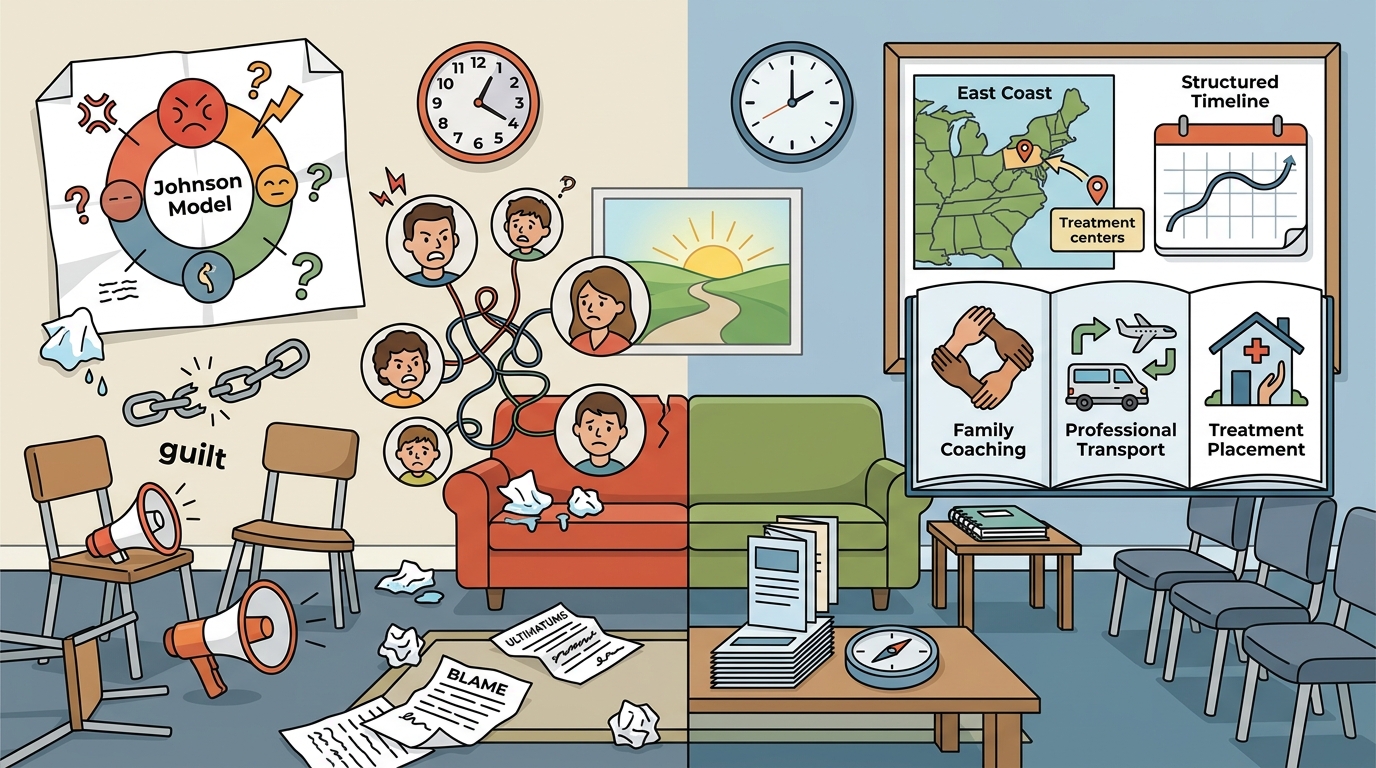
Professional interventionists utilize the Johnson Model, which focuses on preparation and structure. This model ensures that every participant speaks from a place of personal experience rather than accusation. Compassionate accountability is the cornerstone of this approach. It allows the individual to hear their behavior without feeling attacked. Families who skip this emotional preparation often find the meeting devolves into chaos. Without a professional mediator, it is nearly impossible to maintain the necessary calm and focus. The interventionist guides the family to articulate specific consequences, not threats, but natural outcomes of continued substance use.
Mistake 2: Failing to Secure Treatment Before the Meeting
Perhaps the most dangerous mistake is holding an intervention without a confirmed place in a treatment facility. If the individual agrees to get help but has nowhere to go, the intervention fails. This scenario often leads to increased resentment and a deeper entrenchment in addiction. Families must verify insurance coverage and bed availability before gathering the team. This logistical step is often overlooked in the heat of the moment.
At Intervention 365, we coordinate treatment placement as part of our comprehensive service. We ensure that the path from the intervention to detox or rehab is seamless. Treatment readiness requires more than just a phone number. It involves understanding the level of care needed, whether it is inpatient, outpatient, or residential. Without this infrastructure, the family loses credibility. The individual may perceive the intervention as an empty bluff. Securing a bed in advance demonstrates that the family is serious and prepared to support the next steps.
Mistake 3: Including Unstable or Enabling Participants
The composition of the intervention team is crucial. Not everyone who wants to help should be there. Including individuals who are currently under the influence, emotionally volatile, or who have a history of enabling the addiction can derail the process. Enablers often minimize the severity of the problem or offer to bail the individual out again. This undermines the boundaries set by the rest of the group.
Families must carefully vet each participant. The team should consist of close friends and family members who have a positive history with the individual. These people can speak to the impact of the addiction on their own lives. Boundary development is a key component of this selection process. Each participant must be willing to enforce the consequences they outline. If a family member cannot follow through on their stated boundary, they should not participate. Professional interventionists help families curate this list to ensure maximum impact and minimal conflict.
Mistake 4: Ignoring the Johnson Model Framework
The Johnson Model is the industry standard for professional interventions. It was developed by Dr. Vann Joison and has been refined over decades to maximize success rates. Families often attempt to improvise their own approach, which rarely works. Improvised interventions lack the psychological scaffolding needed to break through denial. They often focus on the substance rather than the person.
The Johnson Model emphasizes a structured sequence of events. It begins with extensive family education and planning. Participants write letters and rehearse their statements. This preparation ensures that the meeting remains focused and productive. Recovery preparation is integrated into every stage of this model. It helps the individual see themselves through the eyes of those who love them. Without this framework, the intervention becomes a series of disjointed complaints. Professional guidance ensures that the message is consistent and compelling.
Mistake 5: Neglecting Post-Intervention Support
The intervention is not the end of the process. It is the beginning of a long journey. Many families make the mistake of assuming that once the individual enters treatment, the problem is solved. However, relapse is a common part of the recovery process. Families need ongoing support to maintain the boundaries and communication patterns established during the intervention.
Family coaching and education are essential components of long-term success. Families must learn how to distinguish between support and enabling. They need tools to handle triggers and setbacks. Ongoing family support helps prevent burnout and emotional exhaustion. It also ensures that the home environment remains conducive to recovery. Intervention 365 provides continuous guidance after the intervention. This includes assistance with sober escorts and coordination with treatment providers. The goal is to create a sustainable support system for the entire family.
Key Takeaways
- Professional Guidance is Essential: Jim Reidy, CIP, has conducted over 750 interventions, demonstrating the value of experienced leadership in crisis situations.
- Treatment Must Be Pre-arranged: Never hold an intervention without a confirmed bed at a reputable facility to avoid failure and increased resistance.
- Compassion Over Confrontation: The Johnson Model prioritizes structured compassion to break through denial without triggering defensiveness.
- Team Curation is Critical: Exclude enablers and unstable individuals to maintain the integrity of the boundaries set during the meeting.
- Post-Intervention Support Matters: Family coaching and ongoing education are necessary to sustain recovery and prevent relapse.
- Regional Expertise: Intervention 365 serves families across the East Coast, including Connecticut, Florida, and New York, with localized knowledge of treatment resources.
- Immediate Action Saves Lives: According to NIDA, early intervention significantly improves the likelihood of long-term sobriety and reduces overdose risks.
Frequently Asked Questions
What is the Johnson Model of intervention?
The Johnson Model is a family-centered intervention approach that uses structured preparation, compassionate communication, and firm boundaries to guide an individual toward treatment. It focuses on the impact of addiction on the family system rather than attacking the individual.
How long does a professional intervention take?
A professional intervention typically lasts between two to four hours. This duration allows for adequate preparation, the meeting itself, and the transition to treatment. The exact time depends on the complexity of the case and the number of participants.
Can I perform an intervention without a professional?
While it is possible, it is highly discouraged. Studies show that professional interventions have significantly higher success rates. Without a trained mediator, families often struggle to maintain control and enforce boundaries, leading to failure.
What should I do if my loved one refuses treatment?
If the individual refuses treatment, the family must immediately enforce the consequences they outlined during the intervention. This might include cutting off financial support or changing living arrangements. Consistency is key to demonstrating that the boundaries are real.
Does Intervention 365 offer services in Connecticut?
Yes, Intervention 365 provides comprehensive addiction and mental health intervention services in Connecticut. We assist families in Bridgeport, New Haven, Hartford, and other major cities with tailored intervention planning and treatment coordination.
How do I verify health insurance for treatment?
You can verify health insurance coverage by contacting the treatment facility directly or using online verification tools provided by your insurance provider. Intervention 365 can also assist in navigating insurance benefits to ensure coverage for detox and rehab services.
What is the role of a sober escort?
A sober escort is a professional who accompanies the individual from the intervention site to the treatment facility. They ensure safety, prevent escape attempts, and provide emotional support during the transition. This service is crucial for maintaining the momentum of the intervention.
Contact Intervention 365 for Immediate Help
If you are facing a family crisis involving addiction, do not wait for rock bottom to occur. Professional interventionists are available 24/7 to guide you through the process. Jim Reidy and his team at Intervention 365 offer compassionate, structured, and effective intervention services across the East Coast. We help families navigate the complexities of addiction with expertise and care. Contact us today to verify insurance and schedule a consultation. Click here to contact Intervention 365 and take the first step toward recovery for your loved one.