
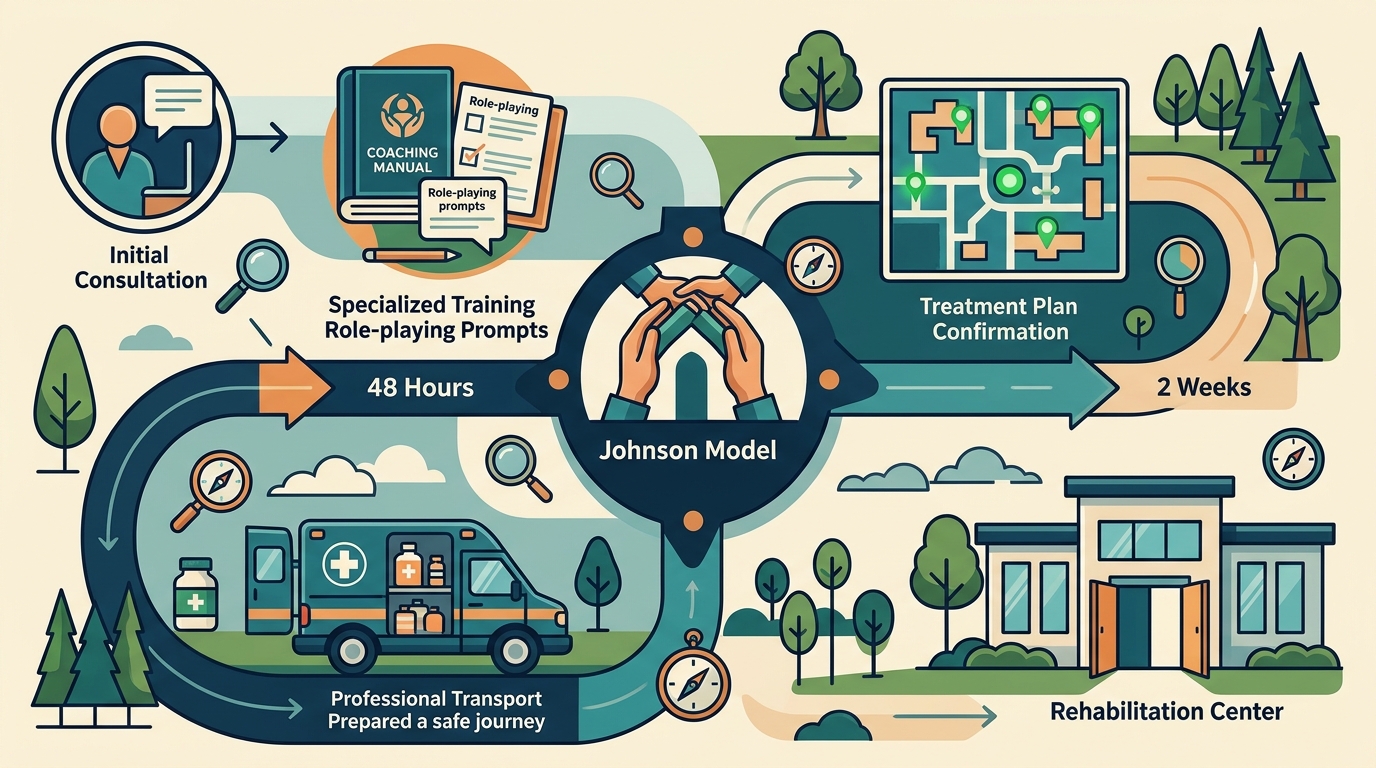
7 Key Stages in Preparing for an Intervention and How Long Each Takes
Preparing for a professional intervention is a structured process that typically takes between 48 hours and two weeks, depending on the complexity of the addiction and the family's readiness. This timeline ensures that every family member is aligned, the treatment plan is confirmed, and the individual is guided safely into care without unnecessary delay. At Intervention 365, we use the Johnson Model to create a calm, effective environment that prioritizes the safety and dignity of the person struggling with addiction.
1. Initial Confidential Consultation
Duration: 1 to 2 hours. The first step is a private conversation with a certified interventionist to assess the current situation. Jim Reidy, a Certified Intervention Professional with over 15 years of experience, listens to the family's history and identifies the specific risks involved. This stage establishes the baseline for the entire plan and ensures that an intervention is the appropriate next step for the family's unique circumstances.
2. Family Education and Alignment
Duration: 24 to 48 hours. Families often arrive with conflicting messages or unresolved emotions that can derail the process. During this stage, the interventionist educates the family on addiction, enabling, and codependency. This coaching ensures that everyone in the room speaks with one voice, reducing the chaos that often accompanies unstructured family meetings.
3. Treatment Plan Verification
Duration: 1 to 3 days. A successful intervention requires a confirmed bed in a treatment facility before the meeting takes place. The interventionist coordinates with clinical teams to verify insurance, medical history, and the appropriate level of care. This step is critical because it ensures that if the individual accepts help, they can be transported to treatment immediately.
4. Letter Writing and Scripting
Duration: 24 to 48 hours. Each family member prepares a short, focused statement that highlights the impact of the addiction without resorting to blame or shame. The interventionist helps shape these letters to ensure they are heard and remain constructive. This preparation allows the family to express their love and concern clearly during the high-pressure moment of the intervention.
5. Logistics and Scheduling
Duration: 1 to 2 days. This stage involves selecting a neutral, safe location and coordinating the timing of the meeting. The interventionist manages all logistical details, including travel arrangements for out-of-state family members. Proper scheduling ensures that the individual is not caught off guard in a way that triggers a defensive or dangerous reaction.
6. The Intervention Meeting
Duration: 1 to 3 hours. The intervention itself is a structured, calm presentation led by the professional. Using the Johnson Model, the interventionist guides the conversation from empathy to facts to a clear offer of help. This stage is the culmination of the preparation, where the family presents a unified front and the individual is given a direct path to recovery.
7. Sober Escort and Treatment Admission
Duration: Immediate to 24 hours. If the individual accepts the offer of help, the interventionist provides professional transport to the treatment facility. This immediate transition prevents the momentum from fading and ensures the individual is safely admitted into care. The interventionist remains available to support the family during the initial admission process.
Choosing the Right Timeline for Your Family
The total time required for these stages depends on the urgency of the situation. In cases of immediate medical danger, the timeline may compress to 48 hours. For more complex cases involving dual diagnosis or legal issues, the process may take up to two weeks. The goal is to move with purpose and precision, ensuring that the family is ready to support long-term recovery.
Frequently Asked Questions
How long does the entire intervention process take?
The entire process typically takes between 48 hours and two weeks. This timeframe allows for thorough family preparation, treatment verification, and the execution of the intervention itself.
Who leads the intervention meeting?
A certified interventionist leads the meeting. At Intervention 365, Jim Reidy, a Certified Intervention Professional, personally leads every intervention to ensure a professional and compassionate approach.
What is the Johnson Model?
The Johnson Model is a family-centered intervention approach that focuses on preparation, structure, and compassion. It is designed to interrupt denial and guide the individual toward immediate treatment.
Do I need to find a treatment facility myself?
No, the interventionist handles treatment placement. They verify insurance and clinical needs to ensure a bed is reserved before the intervention takes place.
What happens if the person refuses treatment?
If the person refuses, the interventionist helps the family establish healthy boundaries and a plan for ongoing support. The focus shifts to protecting the family while keeping the door open for future help.
Is an intervention the same as therapy?
No, an intervention is not therapy. It is a structured process designed to move an individual from resistance into treatment. Clinical therapy is provided by licensed professionals within the treatment facility. Learn more: Contact Alcohol Intervention with.