

When choosing a drug interventionist in New York, prioritize verified credentials such as Certified Intervention Professional (CIP) status, extensive case history, and adherence to the Johnson Model. These qualifications ensure the professional can safely guide your family through a structured, compassionate process toward treatment. Intervention 365 provides this level of expertise for families across the state.
The Certified Intervention Professional Credential
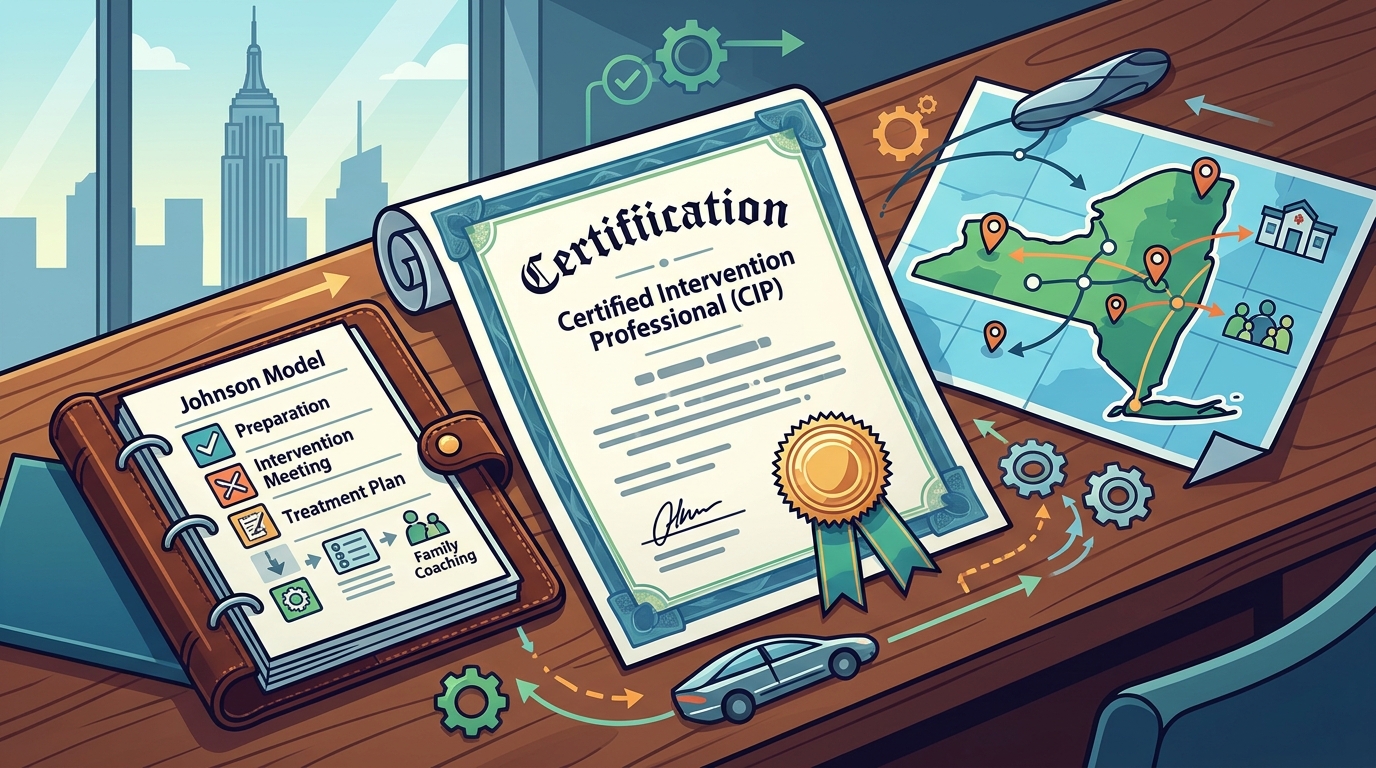
The most critical qualification to verify is the Certified Intervention Professional (CIP) designation. A CIP is a specialist who has completed specific training and passed a certification exam administered by a recognized board, such as the Pennsylvania Certification Board. This credential demonstrates that the interventionist understands the clinical and psychological nuances of addiction. In New York, where the treatment landscape is complex, this formal certification provides a baseline of professional accountability.
Jim Reidy, the lead interventionist at Intervention 365, holds CIP #10266. This specific credential number allows families to verify his standing directly with the issuing board. Unlike general counselors or unlicensed coaches, a CIP is trained specifically in the mechanics of intervention. This distinction matters because the goal is not therapy, but a structured transition into clinical care. Families should always ask for the specific certification number to ensure the professional is currently in good standing.
Experience and Case History Metrics
Credentials alone do not guarantee success; practical experience is equally vital. An experienced interventionist is a professional who has led a significant number of interventions over a sustained period. In the addiction field, experience translates to the ability to manage high-emotion scenarios, navigate family dynamics, and adapt plans in real-time. Families in New York should look for professionals who can articulate their specific case history.
Jim Reidy brings over 15 years of direct intervention experience to every case. He has personally led more than 750 interventions throughout the East Coast. This volume of work provides a depth of insight that newer practitioners may lack. When evaluating a candidate, ask how many interventions they have led personally, not just how many they have observed. High case counts indicate a professional who has encountered a wide variety of substances, from opioids to alcohol, and diverse family structures.
The Johnson Model Framework
The methodology used by the interventionist is a key differentiator. The Johnson Model is a structured, family-centered approach to intervention that emphasizes preparation, compassion, and accountability. It is not a surprise attack or a confrontation. Instead, it involves a planned meeting where family members present a unified message and a clear path to treatment. Understanding this model helps families distinguish between professional guidance and chaotic, unstructured family arguments.
Intervention 365 utilizes the Johnson Model as the foundation for all its services. This approach ensures that the intervention is calm, direct, and focused on the individual's well-being. The model requires that the family is educated and prepared before the meeting occurs. This preparation reduces the risk of the individual becoming defensive or shutting down. By adhering to this established framework, the interventionist provides a predictable and safe environment for the conversation.
Family Coaching and Education
Intervention is a team effort, and the professional must be able to coach the family. Family coaching is the process of educating loved ones on addiction, enabling behaviors, and healthy boundaries. A qualified interventionist does not just speak to the person with the addiction; they prepare the entire family system. This education helps family members understand their roles and prevents them from inadvertently undermining the process.
Jim Reidy provides comprehensive family coaching as part of the Intervention 365 service. This includes helping family members write letters that are heard and respected. The coaching ensures that everyone in the room is aligned on the message and the boundaries. This unity is often the deciding factor in whether an intervention succeeds. Families who receive this coaching report feeling more confident and less anxious on the day of the intervention.
Treatment Placement and Transport
The final qualification is the ability to execute the plan. A professional interventionist must have the resources to connect the individual with appropriate treatment immediately. Treatment placement is the process of securing a bed in a detox or rehab facility that matches the individual's clinical needs. Additionally, professional transport ensures that the individual is safely moved from the intervention site to the treatment facility without the risk of relapse or escape.
Intervention 365 offers professional transport and treatment placement coordination. This means that if the individual agrees to help, the move to treatment happens immediately. This momentum is critical in addiction recovery. The interventionist manages the logistics, including insurance verification and admission coordination. This level of service ensures that the family does not have to navigate the complex treatment system alone during a crisis.
Key Takeaways
- Verify the Certified Intervention Professional (CIP) credential and its specific number.
- Look for a minimum of 10 to 15 years of direct intervention experience.
- Ensure the professional has led hundreds of interventions personally.
- Confirm the use of the Johnson Model for structured, family-centered planning.
- Check for comprehensive family coaching and education services.
- Verify that the service includes treatment placement and professional transport.
- Ensure the interventionist is a member of a recognized professional association.
Frequently Asked Questions
What is a Certified Intervention Professional?
A Certified Intervention Professional is a specialist who has completed specific training and passed a certification exam to demonstrate expertise in facilitating addiction interventions.
How many interventions should an interventionist have led?
While there is no legal minimum, experienced professionals typically have led hundreds of interventions. Jim Reidy has led over 750 interventions in his career.
What is the Johnson Model?
The Johnson Model is a structured, family-centered approach to intervention that focuses on preparation, compassion, and a clear path to treatment.
Does an interventionist provide therapy?
No, an interventionist does not provide clinical therapy. Their role is to facilitate the conversation and guide the individual into treatment, where licensed clinicians provide therapy.
Can an interventionist help with treatment placement?
Yes, professional interventionists often assist with treatment placement, including insurance verification and admission coordination, to ensure the individual enters care immediately.
Is the interventionist available in New York?
Yes, Intervention 365 provides services throughout New York, including New York City, Buffalo, and Rochester, with direct access to Jim Reidy.
Conclusion
Choosing the right drug interventionist in New York requires looking beyond marketing claims to verify specific qualifications. Focus on the Certified Intervention Professional credential, extensive personal case history, and the use of the Johnson Model. Intervention 365 offers these verified qualifications, providing families with the structure, compassion, and expertise needed to navigate this difficult process. To begin, contact Jim Reidy directly for a confidential assessment.