

Professional vs. DIY Intervention: Choosing the Right Path for Your Family
When a loved one is struggling with addiction, the window for effective action is often narrow and unforgiving. According to the National Institute on Drug Abuse, drug overdose deaths in the United States reached a record high in recent years, highlighting the urgent need for immediate and structured intervention. Families frequently face a critical decision: should they attempt a do-it-yourself approach or hire a certified professional? This choice can determine whether a loved one enters treatment or retreats further into denial. Understanding the operational differences, risks, and success rates of each method is essential for making an informed, life-saving decision.
What Is a Professional Intervention?
A professional intervention is a structured, clinically guided meeting designed to help an individual with substance use disorder recognize the impact of their addiction and accept treatment. Unlike informal conversations, a professional intervention follows a specific model, often the Johnson Model, which emphasizes preparation, structure, and compassion. Jim Reidy, CIP is a Certified Intervention Professional with over 15 years of experience helping families navigate these complex crises.
Professional interventionists bring several critical components to the process that families rarely possess on their own. First, they act as neutral third parties who can manage high-emotion dynamics without becoming overwhelmed. Second, they have established relationships with treatment facilities, allowing for immediate placement if the individual agrees to help. Third, they provide pre-intervention coaching to family members, ensuring that everyone involved communicates effectively and sets healthy boundaries.
At Intervention 365, the process begins with a thorough assessment of the individual's history and the family's dynamics. This assessment helps the interventionist tailor the approach to the specific needs of the case. The planning phase involves coordinating with treatment centers, preparing written statements, and rehearsing the intervention to ensure a smooth execution. During the actual intervention, the professional guides the conversation, manages resistance, and facilitates the transition to treatment if the individual agrees.
The DIY Intervention Reality
A do-it-yourself (DIY) intervention involves family members and friends attempting to confront the individual about their addiction without professional guidance. While the intention is often rooted in love and concern, DIY interventions carry significant risks that can undermine their effectiveness. One of the primary challenges is emotional volatility. Family members are often deeply affected by the addiction, which can lead to anger, blame, or pleading during the confrontation. These emotional reactions can trigger defensiveness in the individual, causing them to shut down or leave the situation.
Another common pitfall of DIY interventions is the lack of a concrete plan. Without a pre-arranged treatment placement, the individual may agree to get help but then fail to follow through due to logistical barriers or renewed denial. Additionally, families may struggle to set and enforce boundaries consistently. If boundaries are not clear or are not upheld, the individual may continue their substance use without facing the consequences, reinforcing the addictive behavior.
Furthermore, DIY interventions often lack the strategic preparation that professionals provide. Family members may inadvertently use language that minimizes the severity of the addiction or offers enabling behaviors, such as offering money or covering up mistakes. These actions, while well-intentioned, can prevent the individual from reaching the necessary level of crisis that motivates change. For more information on the signs that indicate a need for professional help, families can explore Connecticut addiction and mental health intervention services.
Comparing Success Rates and Outcomes
Research and clinical experience suggest that professional interventions generally have higher success rates than DIY attempts. According to data from the Association of Intervention Specialists, professional interventions significantly increase the likelihood of treatment acceptance. This is largely due to the structured approach and the presence of a neutral authority figure who can manage the dynamics of the meeting.
Professional interventionists are trained to identify and mitigate resistance. They use specific communication techniques to bypass defensiveness and help the individual see their addiction from a new perspective. They also ensure that the family presents a unified front, which is crucial for demonstrating the seriousness of the situation. In contrast, DIY interventions often suffer from fragmented messaging and inconsistent boundary enforcement, which can dilute the impact of the confrontation.
Another key difference is the post-intervention support. Professional interventionists continue to work with the family after the meeting, providing guidance on how to maintain boundaries and support the individual's recovery journey. This ongoing support is vital for preventing relapse and ensuring long-term success. For families in Florida, professional intervention services offer localized support and access to regional treatment networks.
When to Hire a Professional Interventionist
While DIY interventions may work in some low-risk scenarios, there are several situations where hiring a professional is strongly recommended. First, if the individual has a history of violence or aggression, a professional can ensure the safety of all participants. Second, if the addiction involves multiple substances or co-occurring mental health disorders, a professional's clinical expertise is essential for developing an effective treatment plan.
Additionally, if the family has attempted previous interventions that failed, a professional can provide a fresh perspective and new strategies. Professional interventionists are also valuable when the family is unsure of how to approach the conversation or lacks the emotional resilience to manage the confrontation. For families in Delaware
It is also important to consider the geographic location of the individual. If the person is in a different state or country, a professional interventionist can coordinate logistics, including travel and treatment placement, which can be complex and time-consuming for families to manage alone. Jim Reidy serves families from Maine to Florida, providing consistent, high-quality intervention services across the East Coast. One of the common concerns families have when considering professional intervention is the cost. While DIY interventions may seem free, the hidden costs of failure, including prolonged addiction, legal issues, and medical emergencies, can be far greater. Professional interventions are an investment in the immediate and long-term well-being of the individual and the family. The cost of a professional intervention varies depending on factors such as the complexity of the case, the location, and the services required. However, many interventionists offer payment plans or work with insurance providers to make the service more accessible. It is important to ask about the total cost upfront, including any additional fees for travel, treatment coordination, or follow-up support. Logistically, hiring a professional interventionist simplifies the process by handling the coordination with treatment centers, legal requirements, and family communication. This allows the family to focus on supporting their loved one rather than managing the administrative details. For more details on the specific services offered, families can visit the drug interventionist page. A professional intervention is guided by a certified expert who manages the dynamics, ensures safety, and coordinates treatment placement. A DIY intervention is self-directed by family members, which can lead to emotional escalation and lack of structure. The cost varies based on the complexity of the case and location, but it is an investment in immediate safety and long-term recovery. Many professionals offer payment plans to assist families. Yes, professional interventionists like Jim Reidy can coordinate logistics and treatment placement across state lines, providing support regardless of geographic location. The Johnson Model is a family-centered intervention approach that focuses on preparation, structure, compassion, and accountability to help the individual accept treatment. The process typically involves several weeks of preparation, including family coaching and treatment coordination, followed by a single intervention meeting that may last several hours. Professional interventionists are trained to handle resistance and enforce pre-established boundaries, ensuring that the individual faces the consequences of their actions while maintaining family support. Some insurance plans may cover part of the intervention or subsequent treatment. It is advisable to check with the insurance provider and the interventionist's office for specific details. Choosing between a professional and DIY intervention is one of the most difficult decisions a family can face. However, the stakes are incredibly high, and the need for expert guidance is often paramount. If you are struggling with a loved one's addiction, do not face it alone. Contact Intervention 365 today to speak with a certified professional interventionist. We are here to provide the compassion, structure, and expertise your family needs to navigate this crisis and pave the way for recovery.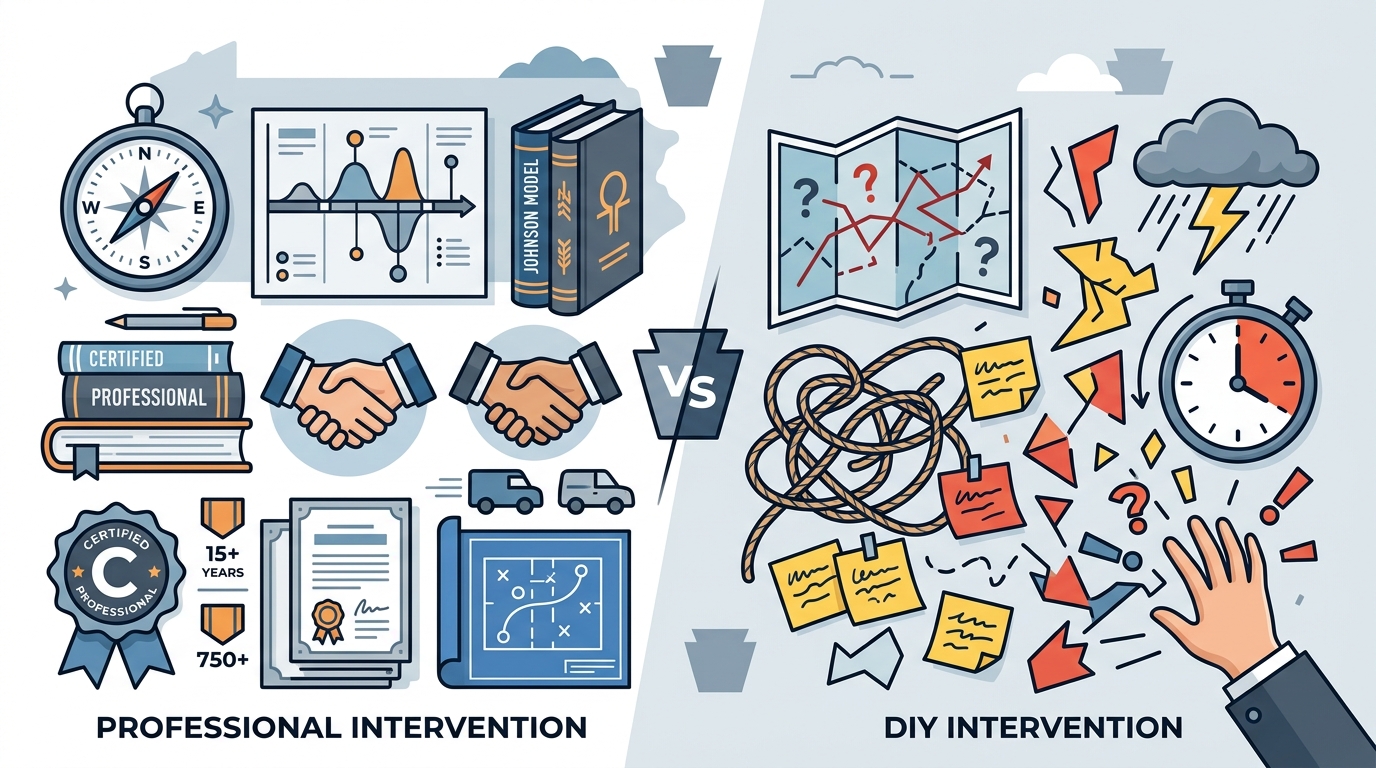
Cost and Logistics of Intervention Services
Key Takeaways
Frequently Asked Questions
What is the difference between a professional and DIY intervention?
How much does a professional intervention cost?
Can a professional interventionist help if the individual is in a different state?
What is the Johnson Model?
How long does a professional intervention take?
What if the individual refuses treatment during the intervention?
Is insurance coverage available for intervention services?
Take the Next Step Toward Recovery