

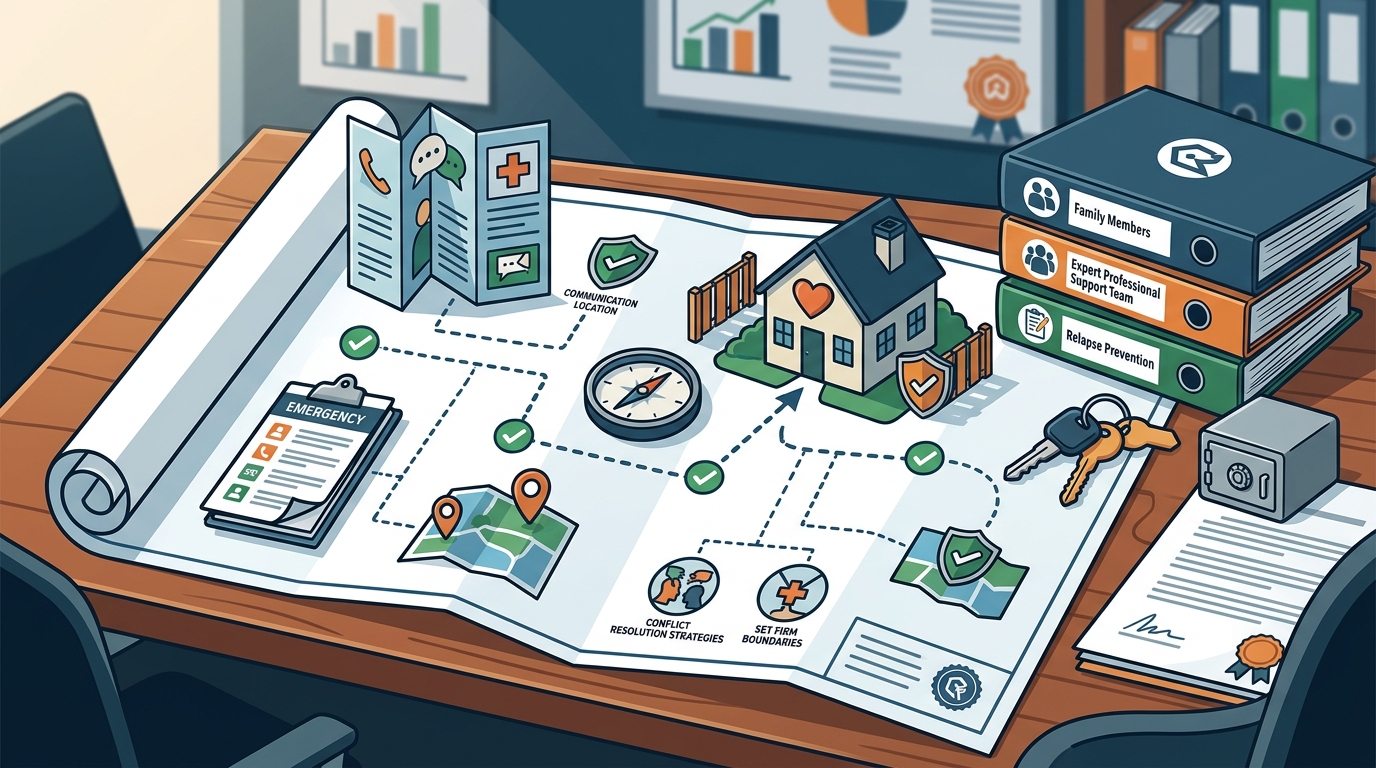
A comprehensive pre-intervention plan serves as the foundational blueprint for successful family recovery efforts. According to the National Institute on Drug Abuse, approximately 21.5 million adults in the United States struggled with substance use disorders in 2023. This statistic highlights the urgent need for structured intervention frameworks. Families often delay professional guidance due to fear or uncertainty. A properly engineered safety protocol eliminates guesswork. It establishes clear boundaries, assigns specific roles, and prepares the team for potential emotional escalation. Without these safeguards, well-meaning efforts frequently backfire and cause lasting relational damage.
Risk Assessment Protocols
Medical History Verification
A risk assessment protocol is a systematic evaluation process that identifies medical vulnerabilities and psychological baselines before any conversation begins. This step prevents triggering acute medical episodes during high-stress discussions. The interventionist reviews prescription medications, past hospitalizations, and known allergies. This data directly informs the pacing of the discussion. Rushing through medical disclosures often compromises participant safety.
Psychological Baseline Evaluation
A psychological baseline evaluation establishes the individual's current mental state. This metric helps the team anticipate defensive reactions or sudden mood shifts. Licensed clinicians often utilize standardized screening tools to measure anxiety levels. These measurements guide the selection of appropriate communication strategies. Adjusting the tone based on these findings reduces confrontation.
Team Role Allocation
Designated Communication Lead
A designated communication lead is a single authorized individual who addresses the individual at a time to prevent chaotic cross-talk. This protocol prevents chaotic cross-talk and maintains conversational focus. The lead typically coordinates with a licensed interventionist to maintain structural integrity. Clear role assignment prevents emotional burnout among family members. Everyone must understand their specific boundaries before the meeting begins.
Support Observer Duties
Support observer duties involve monitoring non-verbal cues and physiological stress signals. These observers track breathing patterns, agitation levels, and withdrawal behaviors. They remain ready to signal the interventionist if tension exceeds safe thresholds. This silent monitoring system acts as an early warning mechanism. It allows the team to pause or redirect the conversation instantly.
Logistical Coordination
Secure Facility Selection
A secure facility selection process guarantees a controlled environment for the discussion. Families must choose locations that minimize external distractions and ensure privacy. Many professionals recommend neutral spaces like hotel conference rooms or private offices. These settings prevent the individual from accessing vehicles or leaving abruptly. Environmental control directly correlates with successful outcomes.
Transportation and Exit Strategies
Transportation and exit strategies address the physical movement of all participants. The team must arrange independent vehicles for every attendee. This precaution ensures that the individual cannot manipulate transportation logistics. Clear departure routes are mapped before the initial conversation starts. Having backup drivers ready eliminates last-minute panic.
Crisis Response Mapping
Immediate Medical Escalation
A crisis response mapping is a pre-arranged emergency framework that defines exact escalation steps and medical contact procedures. The team must know the nearest emergency department location and contact information. This preparation prevents dangerous delays during sudden medical crises. Having emergency numbers pre-loaded into every phone removes friction. Quick action saves lives during unexpected reactions.
Emotional De-escalation Techniques
Emotional de-escalation techniques provide structured methods for lowering intense anger or panic. These methods include active listening, strategic pauses, and validated empathy statements. The interventionist models these behaviors to guide family members. Practicing these responses beforehand builds muscle memory. Calm delivery consistently reduces defensive hostility.
Post-Intervention Follow-Up
Treatment Placement Verification
Treatment placement verification confirms that the individual has secured immediate admission. This step requires direct coordination with licensed rehabilitation facilities. Families must have confirmed bed availability before the intervention concludes. Delaying placement often allows the individual to reconsider or flee. Immediate action solidifies the commitment to recovery.
Family Aftercare Support
Family aftercare support addresses the emotional toll on loved ones. Recovery professionals often recommend individual therapy or support group attendance. These resources help family members process grief, guilt, and relief. Sustained support prevents codependent behaviors from resurfacing. Long-term success depends on continuous professional guidance.
| Planning Component | Primary Objective | Recommended Action |
|---|---|---|
| Risk Assessment | Identify health vulnerabilities | Consult a drug interventionist for medical screening |
| Team Roles | Prevent chaotic communication | Apply the Johnson Model for structured dialogue |
| Logistics | Control environmental factors | Secure an alcohol intervention facility |
| Crisis Response | Handle acute emergencies | Engage mental health interventions specialists |
| Follow-Up | Ensure treatment admission | Access addiction resources for placement |
Key Takeaways
- A comprehensive pre-intervention plan requires verified medical and psychological baselines before any conversation begins.
- Designated team roles prevent chaotic cross-talk and maintain structural integrity throughout the meeting.
- Secure facility selection eliminates external distractions and prevents abrupt departures during high-stress discussions.
- Immediate medical escalation protocols must include pre-mapped emergency department locations and contact information.
- Treatment placement verification requires confirmed bed availability before the intervention concludes to prevent reconsideration.
- Family aftercare support addresses the emotional toll and prevents codependent behaviors from resurfacing.
- Professional interventionists utilize evidence-based frameworks to ensure every participant remains physically and emotionally safe.
Frequently Asked Questions
How long does a pre-intervention planning session typically last?
A comprehensive planning session typically lasts between four and six hours. This duration allows the interventionist to gather medical records, assign roles, and rehearse dialogue. Rushing this phase often compromises the safety of the entire operation.
Can family members conduct a pre-intervention plan without a professional?
Family members should never attempt to conduct a pre-intervention plan without a professional. Untrained individuals frequently misjudge psychological triggers and medical vulnerabilities. Professional oversight ensures that all safety protocols align with clinical standards.
What happens if the individual refuses treatment during the meeting?
If the individual refuses treatment during the meeting, the team must immediately execute the pre-established consequences. These consequences involve removing financial support, limiting access to shared assets, and enforcing strict boundaries. Consistent enforcement demonstrates that the family will no longer enable the behavior.
How do you handle sudden medical emergencies during planning?
You handle sudden medical emergencies by activating the pre-mapped escalation protocol. The interventionist immediately contacts emergency services while family members maintain a calm perimeter. Having emergency numbers pre-loaded into every device eliminates dangerous delays.
Is it necessary to secure treatment placement before the intervention?
Securing treatment placement before the intervention is absolutely necessary. Families must confirm bed availability with licensed rehabilitation facilities. Delaying placement allows the individual to reconsider or flee, which undermines the entire effort.
Secure Your Family Safety Today
Do not navigate the complexities of addiction recovery alone. Our licensed interventionists specialize in engineering comprehensive safety protocols tailored to your specific situation. Contact us today to schedule a confidential consultation and begin building your customized intervention strategy. Visit our main page to learn more about our services and service areas.