

Staging an intervention for a loved one struggling with addiction is one of the most emotionally charged decisions a family can make. Without a detailed pre-intervention plan that prioritizes safety, the meeting can quickly spiral into blame, escalation, or even physical danger. This ultimate guide walks you through every component your plan should include—from assembling the right team to preparing for worst-case scenarios—so the intervention protects everyone in the room while giving your loved one the best chance of accepting help.
Why a Pre-Intervention Plan Matters
An intervention without a plan is a conversation that can go wrong in dozens of ways. The person may react with anger, denial, or even aggression. Family members may say things they did not intend. Emotions run high, and without structure, the meeting can cause more harm than good.
A carefully planned process removes much of that volatility. When family members and close friends know exactly what they will say, when they will speak, and what boundaries they will enforce, the intervention stays focused on solutions rather than accusations.
Step 1: Engage a Professional Interventionist
The single most important safety decision you can make is bringing in an expert. A professional interventionist structures the planning process, guides the intervention team, and leads the overall event. They also help everyone prepare for all possible outcomes—acceptance, refusal, or an emotional exit from the room.
Interventionists are trained in conflict resolution and de-escalation. They keep intervention meetings on track and provide support if family members become especially emotional or distracted. If budget is a concern, contact local treatment centres to ask about cost-effective options or consult a social worker for guidance.
Step 2: Assemble the Right Team
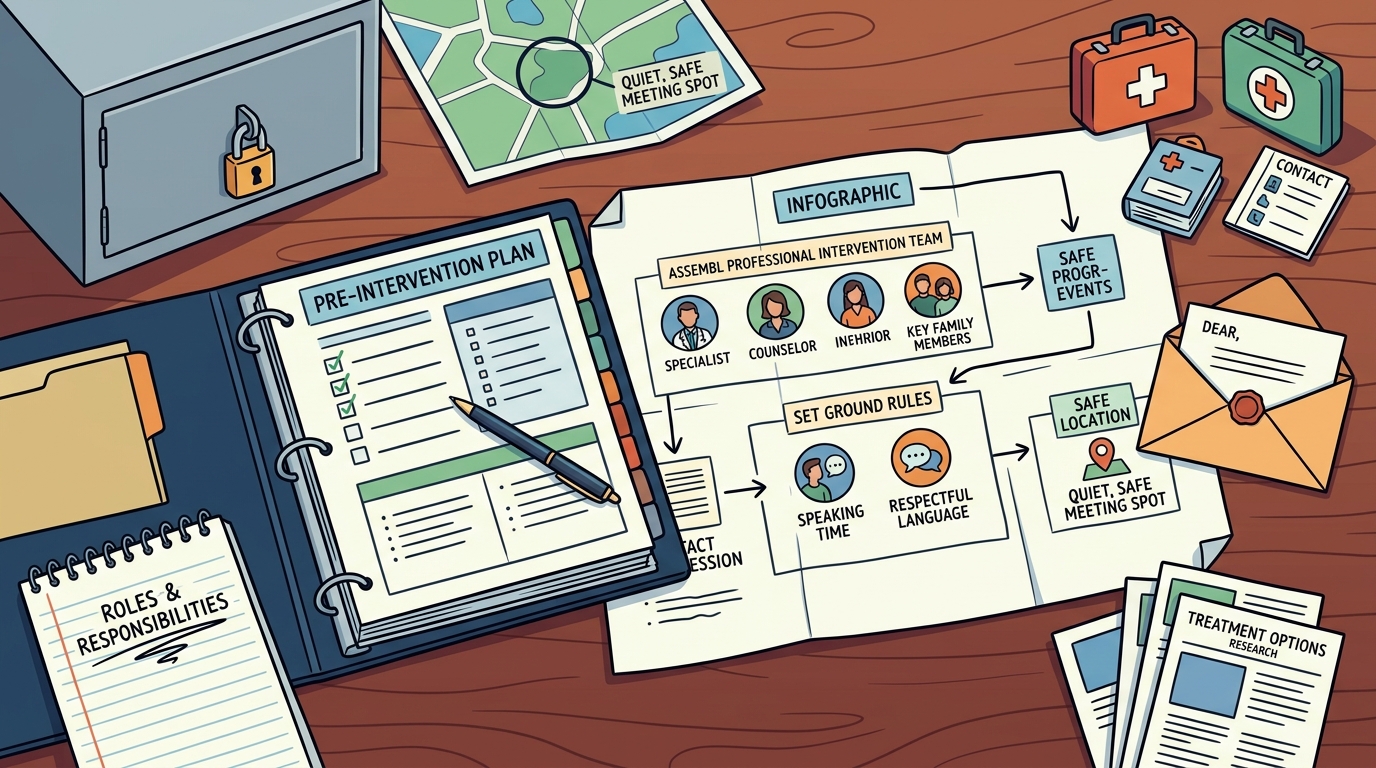
Not everyone who cares about your loved one should be in the room. The team should be small—typically three to six people—to avoid overwhelming the individual. Generally, only close family members, friends, and perhaps a coworker or faith leader should be included.
Who to exclude
- Anyone currently struggling with their own substance use
- Individuals who may not be able to limit what they say to the agreed script
- People whose presence could trigger hostility in the person with the addiction
If someone important cannot attend without risking disruption, consider having them write a short letter that another team member reads aloud during the meeting.
Step 3: Conduct a Thorough Risk Assessment
Before anything else, the planning group should screen for immediate safety risks. A coordinator or clinician gathers history and screens for suicidality, medical instability, and the potential for violence. This triage step improves safety and sets realistic expectations about what can—and cannot—happen during the intervention.
Key risk factors to evaluate
- History of violence or aggression when confronted
- Co-occurring mental health conditions such as severe depression, psychosis, or PTSD
- Withdrawal danger: severe alcohol or benzodiazepine withdrawal can be life-threatening and may require medical assessment before any group meeting
- Access to weapons or lethal means in the intervention environment
If the risk assessment reveals high danger, a crisis intervention model—led by specialist crisis teams—may be more appropriate than a traditional group meeting.
Step 4: Choose a Safe Location and Time
The setting itself is a safety variable. Select a neutral, private, and comfortable space where your loved one will not feel ambushed—a family member's living room, a counsellor's office, or a quiet meeting room. Avoid public places where embarrassment could trigger an extreme reaction.
Timing considerations
- Schedule the intervention when the person is most likely to be sober or at their calmest
- Avoid holidays, anniversaries of traumatic events, or periods of known high stress
- Ensure the treatment facility can admit the person immediately or the next day if they agree
Step 5: Research and Pre-Arrange Treatment Options
A pre-intervention plan must include a concrete treatment offer. An addiction professional helps determine the scope of the issue and which treatment options are appropriate. Options can include brief early intervention, outpatient treatment, day treatment programmes, or a stay at a residential facility for more serious issues.
Pre-arrange admissions so that if your loved one says yes, transport and intake can happen the same day. Having the logistics already handled removes any delay that could allow second thoughts.
Step 6: Write and Rehearse Individual Scripts
Each team member should prepare a written statement that follows a structured format:
- Concrete observation: “I’ve noticed you missing work three days a week.”
- Health and safety concern: “I’m worried because you were hospitalised last month.”
- Specific offer: “A bed is available at [facility name] today at 3 p.m.”
Keep judgmental labels out. Discuss the toll of the person's behaviour while remaining caring and conveying belief that they can change. Every statement should be reviewed by the interventionist before the meeting.
Full-group rehearsal
Rehearse the whole intervention with everyone at least once before it occurs. This allows each team member to know what to say, when they will speak, and when to cede the floor. Rehearsal also lets the interventionist identify scripts that could provoke defensiveness and adjust them in advance.
Step 7: Establish Clear Boundaries and Consequences
Every person on the team must decide in advance what action they will take if the loved one refuses treatment. Consequences might include ending financial support, not allowing the person to live in the family home, or limiting contact.
Critically, no one should state a consequence they are not ready to enforce. Empty threats erode trust and undermine the seriousness of the intervention. The plan should also include what happens after “not today”—a re-engagement window, maintained boundaries, and a specific check-in date—so the path to treatment remains open.
Step 8: Plan for Every Possible Response
Your pre-intervention plan should map out contingency actions for at least three scenarios:
| Scenario | Pre-Planned Response |
|---|---|
| Loved one agrees to treatment | Transport them to the facility immediately; have a bag packed and insurance paperwork ready |
| Loved one refuses but stays calm | Each member calmly states their boundary; leave the treatment offer on the table with a timeline |
| Loved one becomes aggressive or leaves | Do not pursue or restrain; interventionist de-escalates; if violence is imminent, call emergency services |
Planning for an angry or volatile response is especially important when the risk assessment has flagged aggression. Ensure that the exit path from the room is clear and that no one is positioned between the person and the door.
Step 9: Secure the Physical Environment
On the day of the intervention, take practical safety measures:
- Remove or lock away firearms, sharp objects, and medications from the meeting space
- Ensure that all participants can leave safely if the situation escalates
- Have a phone charged and accessible to call emergency services
- If the person drives themselves, arrange alternative transport home or to treatment so an upset individual is not behind the wheel
Step 10: Protect the Emotional Well-Being of Participants
Safety is not only physical. Family members often carry years of trauma, guilt, and exhaustion. The pre-intervention plan should address emotional preparedness:
- Each participant should have access to their own counsellor or support group—such as Al-Anon—before and after the event
- The interventionist should debrief the team after the meeting regardless of outcome
- Models such as CRAFT (Community Reinforcement and Family Training) emphasise positive communication and reducing enabling in ways that preserve connection, even if the person initially declines help
Step 11: Build a Follow-Up Protocol
The intervention does not end when the meeting is over. Involving a spouse, family members, or others is key to helping someone with an addiction stay in treatment and avoid relapse. Your follow-up protocol should include:
- Changing patterns of everyday living to make it easier to stay away from destructive behaviour
- Offering to participate in counselling with your loved one
- Seeking your own therapist and recovery support
- Knowing what to do if your loved one relapses
Continuity of care is consistent with addiction-treatment principles that highlight adequate duration and ongoing support for both the person in recovery and their family.
Key Takeaways
- Never stage an intervention without a written, rehearsed plan—spontaneity increases risk for everyone
- A professional interventionist is the most effective safeguard against escalation and emotional harm
- Risk assessment before the meeting identifies medical, psychological, and physical dangers that could derail the process
- Keep the team small (three to six people), well-rehearsed, and united on boundaries
- Pre-arrange treatment admission so there is no gap between acceptance and action
- Plan for refusal just as thoroughly as you plan for acceptance
- Protect the physical space by removing weapons, medications, and other hazards
- Emotional safety matters—ensure every participant has their own support system in place
Frequently Asked Questions
What is a pre-intervention plan?
A pre-intervention plan is a structured, written roadmap created before confronting a loved one about addiction. It covers team roles, safety protocols, treatment options, rehearsed scripts, boundaries, and contingency strategies designed to keep every participant safe throughout the process.
Should I hire a professional interventionist?
Working with a professional interventionist is strongly recommended. They structure the planning process, guide the team, lead the event, and prepare everyone for all possible outcomes. Without professional guidance, the family may lack the conflict resolution skills and neutrality needed to keep the meeting productive and safe.
How many people should be on the intervention team?
The ideal team includes three to six participants. A smaller group avoids overwhelming the individual while still carrying enough emotional significance to encourage change. Only include people who can stay composed and follow the agreed script.
What happens if the person refuses treatment?
Each team member should have predetermined consequences they are prepared to enforce. The plan should also include a re-engagement window with a specific check-in date so the opportunity for treatment remains available.
How do I keep the intervention from becoming confrontational?
Rehearse the entire intervention at least once beforehand. Use non-blaming scripts built around concrete observations, health concerns, and a specific treatment offer. A professional interventionist mediates the conversation and provides de-escalation techniques if emotions rise.
What if my loved one has a history of violence?
The risk assessment phase should identify this. If violence is a known possibility, consider a crisis intervention model with specialist crisis teams, ensure the exit path is clear, remove potential weapons from the space, and have a plan to contact emergency services immediately if needed.