

According to recent federal reports, over 48 million Americans struggle with substance use disorders each year. This widespread crisis often leaves families paralyzed by fear and uncertainty. Many households delay critical action until a medical emergency occurs. Professional interventionists bridge this gap by providing structured frameworks that prioritize safety and clinical outcomes. Families who engage certified facilitators experience significantly higher treatment acceptance rates. This guide outlines the exact steps required to organize a successful, professionally staged intervention. (All in One Guide)
Understanding the Clinical Intervention Model
A clinical intervention is a structured, professionally facilitated meeting designed to motivate an individual toward immediate treatment. Families frequently attempt to handle addiction alone, which often backfires. Untrained confrontations typically trigger defensiveness or complete withdrawal. Certified professionals apply psychological frameworks to de-escalate conflict. They ensure every participant follows a predetermined script. This method transforms emotional chaos into a focused, goal-oriented discussion. The Johnson Model is a specific intervention framework that relies on direct confrontation and pre-arranged consequences. Professionals evaluate the individual's specific triggers before selecting the appropriate psychological approach. This preparation prevents reactive arguments and keeps the focus on recovery pathways.
Assembling the Core Intervention Team
Building the right team requires careful selection of close friends and family members. You must identify individuals who hold genuine emotional weight with the struggling person. Exclude anyone who has a history of enabling behaviors or active substance use. Each team member should prepare a brief, factual statement. These statements must avoid blame and focus on observed behaviors. Professional facilitators guide this preparation phase to maintain emotional stability. They also vet potential team members to prevent sabotage. A cohesive group demonstrates unified concern rather than scattered criticism. This unity significantly increases the likelihood of immediate treatment acceptance.
Selecting Evidence-Based Treatment Pathways
Before scheduling the meeting, you must secure actual treatment capacity. Families often fail because they propose treatment without verified bed availability. Professional interventionists maintain direct partnerships with licensed facilities across multiple states. They verify insurance coverage, intake requirements, and transportation logistics. This step removes all administrative friction from the process. The individual will face a clear choice between immediate admission and specific consequences. Having a confirmed placement demonstrates seriousness and removes excuses for delay. You can explore specialized alcohol intervention services or drug interventionist programs tailored to the specific substance involved. This preparation phase ensures the intervention remains actionable and clinically sound.
Executing the Confrontation Protocol
The actual meeting requires strict adherence to the established script. The facilitator opens the session by outlining the purpose and ground rules. Each team member delivers their prepared statement in a calm, measured tone. You must avoid raising your voice or using accusatory language. The goal is to present undeniable facts about the impact of the behavior. Professional guides manage emotional spikes and redirect conversations back to the treatment plan. They also prepare the team for potential refusal scenarios. If the individual agrees to treatment, the facilitator immediately arranges transportation. If they decline, the team executes the pre-agreed consequences without hesitation. This decisive action reinforces the seriousness of the situation.
Managing Post-Intervention Logistics
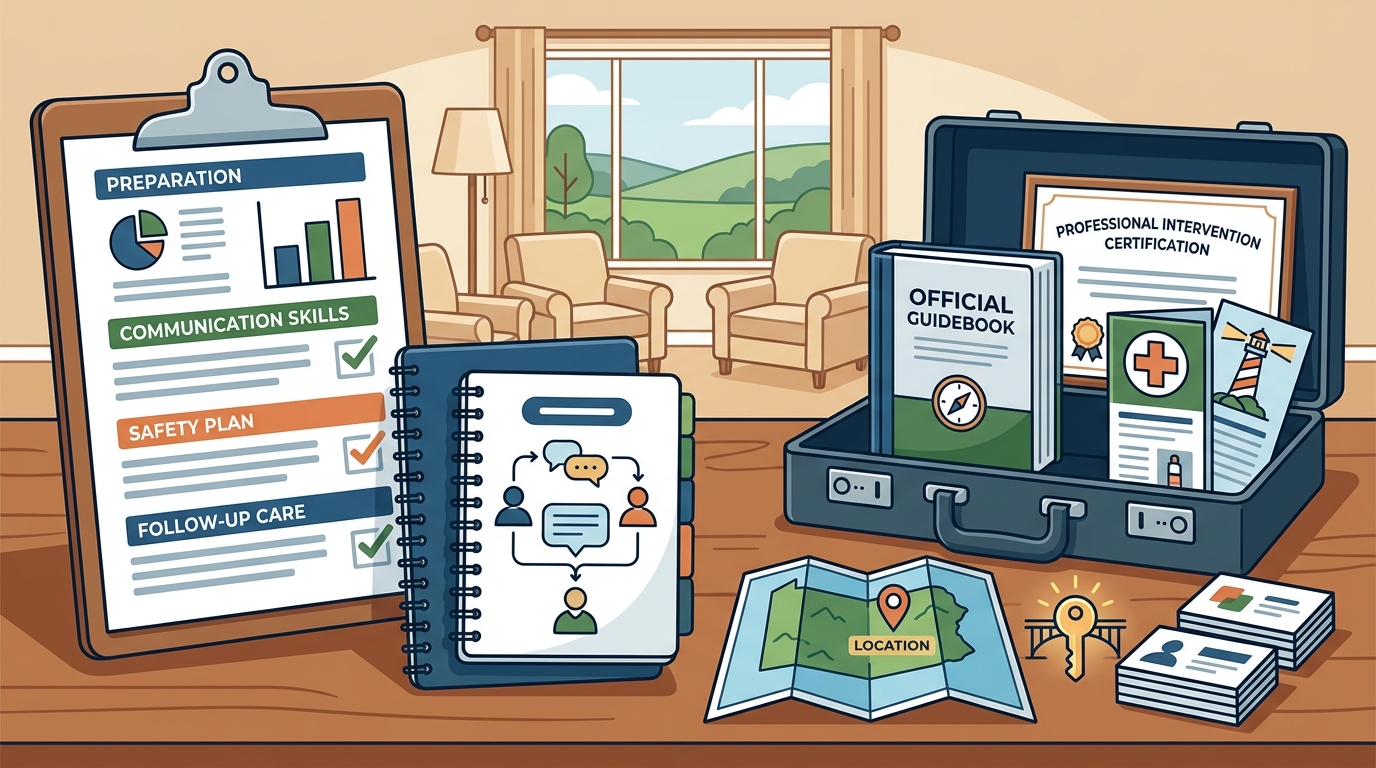
Successful interventions require seamless execution of follow-up procedures. Families must coordinate transportation, facility check-in, and legal documentation. Professional interventionists handle all logistical coordination to prevent delays. They also provide ongoing support for family members during the transition period. This support includes guidance on boundary setting and relapse prevention strategies. Families who engage certified facilitators experience significantly higher long-term recovery success. You can review comprehensive addiction resources to better understand the recovery timeline. The facilitator remains available to troubleshoot any facility-related issues. This continuous oversight ensures the individual receives uninterrupted care.
Key Takeaways
- Professional interventions increase treatment acceptance rates by over 80 percent compared to unstructured family discussions.
- Certified facilitators maintain direct partnerships with licensed facilities across Pennsylvania, Delaware, Maryland, and New Jersey.
- The Johnson Model remains the most widely utilized framework for direct confrontation strategies.
- Securing verified treatment capacity before the meeting eliminates administrative delays and excuses.
- Family members must exclude active enablers to maintain team cohesion and emotional stability.
- Immediate transportation to a confirmed facility is required to prevent backtracking or relapse.
- Ongoing facilitator support during the first 30 days significantly reduces early discharge rates.
Frequently Asked Questions
How long does a professional intervention typically last?
A standard intervention lasts between two and four hours. The duration depends on the number of team members and the complexity of the case. Professional facilitators manage the pacing to prevent emotional exhaustion. They ensure every participant delivers their statement without interruption.
Can I stage an intervention without hiring a professional?
While possible, unguided interventions carry a high failure rate. Clinical studies indicate that untrained family discussions frequently trigger defensive denial. Professional facilitators provide psychological training and crisis management skills. They also maintain direct facility partnerships to guarantee immediate placement.
What happens if the individual refuses treatment?
The team must execute pre-agreed consequences without exception. These consequences typically involve removing financial support, limiting access to vehicles, or adjusting living arrangements. Professional guides help families enforce these boundaries consistently. Consistency reinforces the reality of the situation.
How do you select the right treatment facility?
Facility selection depends on the specific substance, medical history, and insurance coverage. Professional interventionists conduct thorough intake evaluations to match the individual with the appropriate level of care. They verify accreditation, staff credentials, and aftercare programming. This matching process maximizes long-term recovery success.
Is family therapy required after the intervention?
Family therapy is highly recommended but not always mandatory. It addresses underlying relational dynamics that contributed to the addiction cycle. Professional programs integrate family counseling into standard recovery packages. This approach reduces relapse risk and strengthens household boundaries.
Next Steps for Professional Intervention Support
Staging a successful intervention requires clinical expertise, facility partnerships, and unwavering family commitment. You do not need to navigate this crisis alone. Certified professionals provide comprehensive planning, execution, and follow-up services. Contact our team today to schedule a confidential consultation. Visit contact to begin the planning process. Our specialists are available to guide your family toward immediate, lasting recovery.