

When addiction takes hold, families need experienced guidance they can trust. Jim Reidy, a Certified Intervention Professional (CIP), has spent 15+ years helping more than 750 families navigate the intervention process with compassion, structure, and accountability. Intervention 365 provides professional intervention services, family coaching, treatment coordination, and transportation assistance throughout the East Coast and beyond. The decision to intervene is rarely about choosing between two unrelated paths. It is about recognizing that the underlying mechanism of addiction is a system of thinking, reacting, avoiding, manipulating, soothing, escaping, and reorganizing life around one central goal: maximum comfort and minimum discomfort. This system operates regardless of whether the substance is alcohol, opioids, or stimulants. Understanding the nuances between alcohol intervention and drug intervention is critical for families seeking immediate, effective help. (Contact Intervention Help Contact)
Understanding the Core Differences
Many families believe that an alcohol intervention and a drug intervention are entirely separate disciplines. While the substances involved differ, the psychological framework remains consistent. Addiction is not just a drug problem. Addiction is not just an alcohol problem. Addiction is a system of thinking, reacting, avoiding, manipulating, soothing, escaping, and reorganizing life around one central goal: maximum comfort and minimum discomfort. This definition applies universally across substance use disorders. (Addiction Intervention Delaware Delaware)
The primary difference lies in the physiological withdrawal risks and the specific behavioral patterns associated with each substance. Alcohol withdrawal can be medically dangerous, sometimes life-threatening, requiring immediate medical detoxification. Drug interventions, particularly those involving opioids or benzodiazepines, also carry significant medical risks. However, the behavioral manipulation tactics used by individuals struggling with alcohol often differ from those used by individuals struggling with illicit drugs. Alcohol is legal, socially accepted, and easily accessible, which can normalize the behavior for longer periods. Illicit drugs are often hidden, leading to more secretive and isolated behavioral patterns.
At Intervention 365, we recognize that the substance is merely the symptom. The root cause is often an inability or unwillingness to deal with uncomfortable feelings, uncomfortable situations, old pain, fear, stress, shame, emptiness, or unresolved life events in a healthy way. This is why simply removing the substance is rarely enough. This is why simply sending somebody away is rarely enough. This is why simply hoping they wake up is rarely enough. And that is why the family system must be addressed.
The Alcohol Intervention Process
When alcoholism enters a family, it rarely affects only one person. Alcohol addiction slowly impacts marriages, children, careers, finances, emotional stability, and physical health. Families often spend years trying to manage chaos, protect their loved one, avoid conflict, and hope things will somehow improve on their own. Unfortunately, alcoholism almost always progresses without professional help.
A professional alcohol intervention is not about punishment or humiliation. A structured alcohol intervention is designed to interrupt denial, educate the family system, establish healthy boundaries, and guide the individual toward immediate treatment. The Johnson Model family intervention approach is heavily utilized in these scenarios. This model focuses on preparation, structure, compassion, accountability, and treatment readiness.
Common statements families make when seeking an alcohol intervention include: "He promises to stop drinking but never does," "She drinks every night and becomes a different person," and "We are afraid something terrible is going to happen." These situations are exactly where professional intervention services can help. The process involves:
- Family Education: Understanding the disease of addiction and how alcohol affects the brain.
- Communication Restructuring: Learning how to speak without enabling or blaming.
- Treatment Planning: Identifying appropriate rehab facilities that specialize in alcohol use disorder.
- Boundary Development: Establishing clear consequences for continued drinking.
- Recovery Preparation: Preparing the individual for the transition into treatment.
- Immediate Alcohol Rehab Placement: Ensuring a bed is available upon acceptance.
- Ongoing Family Support: Providing coaching for the family during the early stages of recovery.
Many individuals struggling with alcoholism normalize dangerous drinking behaviors over time. Warning signs often include daily drinking, blackouts, drinking and driving, morning drinking, isolation, severe mood swings, failed attempts at sobriety, hiding alcohol, aggressive behavior while intoxicated, medical complications from alcohol use, job instability, financial decline, family conflict, legal problems or DUIs, mixing alcohol with medications, and severe alcohol withdrawal.
The Drug Intervention Process
Drug interventions share the same foundational goals as alcohol interventions but often require a more nuanced approach due to the nature of illicit substances. When families begin searching for an interventionist near me, they usually believe they are looking for help for a loved one who drinks too much, uses too much, lies too much, manipulates too much, or keeps destroying one opportunity after another. What they are really looking for is an explanation.
At intervention365.com we help families understand something that changes everything: Addiction is a system of thinking, reacting, avoiding, manipulating, soothing, escaping, and reorganizing life around one central goal: maximum comfort and minimum discomfort. That is where this conversation has to begin. As a Jim Reidy interventionist, I have seen this truth play out in living rooms, boardrooms, family meetings, treatment admissions, relapse situations, and long-term recovery planning all across Pennsylvania, Maryland, Delaware, and New Jersey. Families often believe the chaos is random. It is not random. It is patterned. It is emotional. It is strategic. And once you understand the pattern, you can intervene in a way that actually works.
Drug interventions often require a deeper dive into the specific drug class involved. Opioid addiction, for example, requires a different medical detox protocol than stimulant addiction. The manipulation tactics used by individuals struggling with drugs can be more sophisticated because the substance is often illegal and stigmatized. The addicted person can manipulate the household, the relationships, the routines, the emotions, and even the identities of the people around them until everyone is living in response to the addiction.
Real recovery is not based on somebody else's standard. Real recovery is facing life without hiding behind substances or distractions. Sobriety and recovery are not always the same thing. A person can stop using for a period of time and still not be living in recovery. Lasting recovery requires more than detox. It requires dealing with past pain, present discomfort, and learning tools for healthy living.
Comparing Treatment Needs
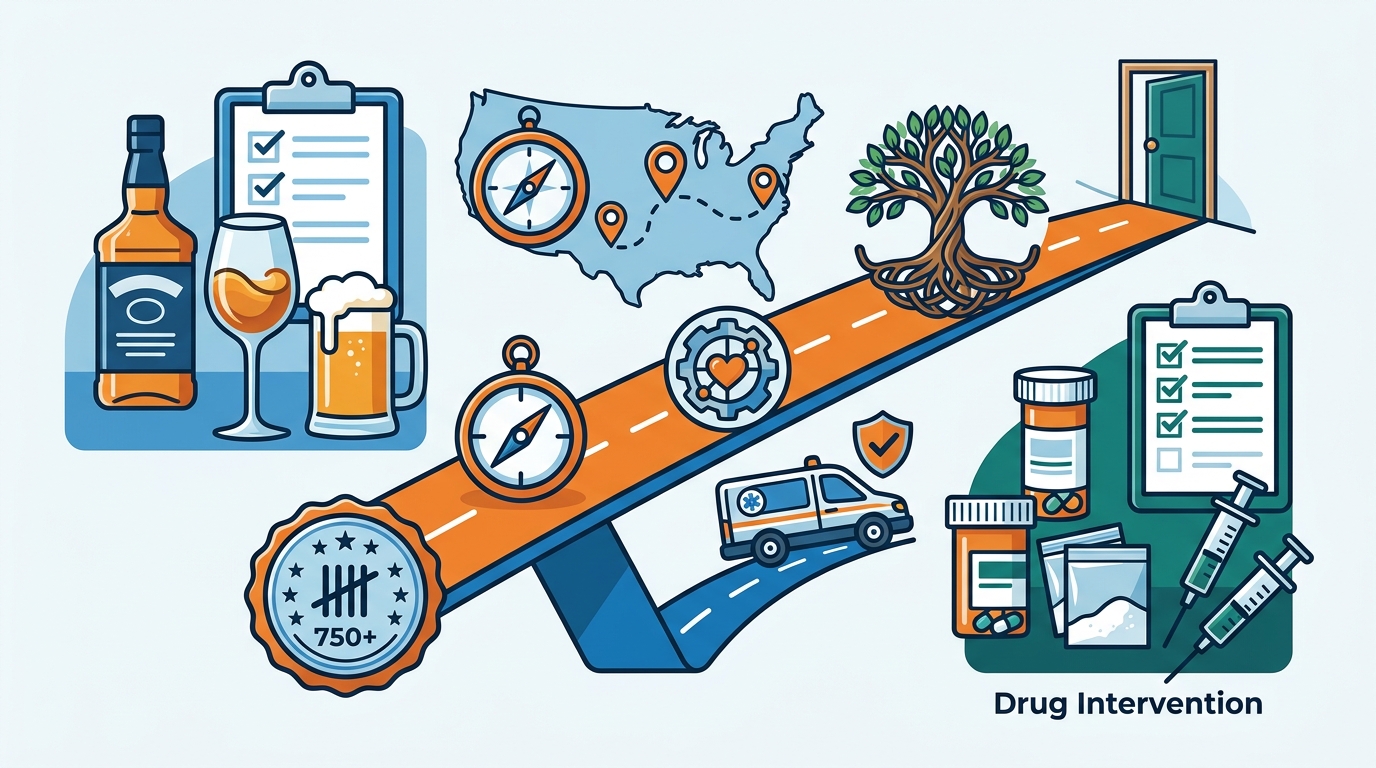
While the intervention process is similar, the treatment needs differ significantly between alcohol and drug addiction. Understanding these differences is crucial for selecting the right facility and program. The following table outlines the key distinctions.
| Factor | Alcohol Intervention | Drug Intervention |
|---|---|---|
| Primary Medical Risk | Severe withdrawal, delirium tremens, seizures. | Varies by drug; opioids cause severe pain/flu-like symptoms; stimulants cause psychosis. |
| Access & Normalization | Highly accessible, socially normalized, often used for stress relief. | Often hidden, illegal, associated with shame and secrecy. |
| Behavioral Patterns | Aggression, emotional volatility, financial drain, public incidents. | Isolation, deception, theft, erratic schedules, physical deterioration. |
| Detox Requirements | Medical detox is often mandatory and time-sensitive. | Medical detox is critical; may require medication-assisted treatment (MAT). |
| Therapeutic Focus | Addressing social triggers, stress management, and emotional regulation. | Addressing trauma, underlying mental health disorders, and high-risk environments. |
Alcoholism impacts the entire family system, not just the individual drinking. Drug addiction often isolates the individual, but the family system becomes an extension of the addiction, even when that is not the family's intention. The addicted person can manipulate the household, the relationships, the routines, the emotions, and even the identities of the people around them until everyone is living in response to the addiction.
Why Family Systems Matter
Regardless of the substance, the family system is the core of the intervention. Addiction is often organized around four basic emotional drives: avoiding uncomfortable feelings, things, or situations; seeking pleasure or comfort; seeking validation or attention; and creating an environment that provides the most comfort and the least discomfort. The family often becomes an extension of the addiction, even when that is not the family's intention.
At Intervention 365, we teach families that substance abuse is often the symptom of something deeper: an inability or unwillingness to deal with uncomfortable feelings, uncomfortable situations, old pain, fear, stress, shame, emptiness, or unresolved life events in a healthy way. This is why simply removing the substance is rarely enough. This is why simply sending somebody away is rarely enough. This is why simply hoping they wake up is rarely enough. And that is why the family system must be addressed.
Jim Reidy was selected by fellow intervention professionals and colleagues to assist a critically struggling family in Philadelphia featured on A&E's Intervention during the height of the Kensington addiction crisis. Today, that individual remains alive, thriving, and has never returned to the streets where she struggled for nearly two decades. This case study highlights the importance of a professional, structured approach that addresses both the individual and the family system.
Key Takeaways
- Professional Experience: Jim Reidy has conducted over 750 interventions, providing a wealth of experience in handling complex family dynamics.
- Certified Expertise: As a Certified Intervention Professional (CIP #10266), Jim Reidy adheres to the highest standards of the Association of Intervention Specialists.
- Geographic Reach: Intervention 365 serves families from Maine to Florida, with a strong presence in Pennsylvania, Maryland, Delaware, and New Jersey.
- Johnson Model Approach: The Johnson Model family intervention approach is the standard for structured, compassionate, and effective interventions.
- Family System Focus: Successful intervention requires addressing the family system, not just the individual's substance use.
- Immediate Action: Waiting for rock bottom is dangerous. Professional intervention creates a structured opportunity for change before tragedy occurs.
- Media Recognition: Jim Reidy's expertise was recognized by A&E's Intervention, Season 20, highlighting his ability to handle high-stakes cases.
Frequently Asked Questions
What is the difference between an alcohol intervention and a drug intervention?
The primary difference lies in the physiological withdrawal risks and the specific behavioral patterns associated with each substance. Alcohol withdrawal can be medically dangerous, requiring immediate medical detoxification. Drug interventions often require a deeper dive into the specific drug class involved and may require medication-assisted treatment (MAT). However, the psychological framework and the Johnson Model approach remain consistent across both.
Is an intervention only for alcohol addiction?
No. Intervention 365 provides professional intervention services for both alcohol and drug addiction. Addiction is a system of thinking, reacting, avoiding, manipulating, soothing, escaping, and reorganizing life around one central goal: maximum comfort and minimum discomfort. This system operates regardless of the substance involved.
How long does a professional intervention take?
The planning phase typically takes several days to a week, depending on the complexity of the case and the availability of treatment facilities. The intervention meeting itself usually lasts between one to two hours. The goal is to help the individual recognize the seriousness of their addiction and accept immediate professional help.
Can Intervention 365 help with family members who refuse treatment?
Yes. A significant part of the intervention process is educating the family system and establishing healthy boundaries. Even if the individual refuses treatment initially, the family learns how to stop enabling the addiction and how to respond consistently to continued substance use.
What is the Johnson Model family intervention approach?
The Johnson Model is a family-centered intervention model focused on preparation, structure, compassion, accountability, and treatment readiness. It involves a pre-planned meeting where family members and loved ones present a unified front, expressing concern and offering a treatment plan.
Does Intervention 365 offer services outside of Pennsylvania?
Yes. Intervention 365 serves families from Maine to Florida. Jim Reidy has extensive experience working with families in Ohio, Maine, New Hampshire, Massachusetts, Rhode Island, Connecticut, New York, New Jersey, Delaware, Maryland, Virginia, North Carolina, South Carolina, Georgia, and Florida.
What should I do if my loved one is in immediate danger?
If your loved one is in immediate danger, call 911 or your local emergency services. For professional guidance on how to proceed with an intervention, contact Intervention 365 at (888)-972-8513.
Contact Intervention 365
When addiction takes hold, families need experienced guidance they can trust. Jim Reidy, a Certified Intervention Professional (CIP), has spent 15+ years helping more than 750 families navigate the intervention process with compassion, structure, and accountability. Intervention 365 provides professional intervention services, family coaching, treatment coordination, and transportation assistance throughout the East Coast and beyond. If you are struggling with alcohol or drug addiction in your family, do not wait for rock bottom. Contact Intervention 365 today to schedule a consultation and learn how we can help your family find a path to recovery.