
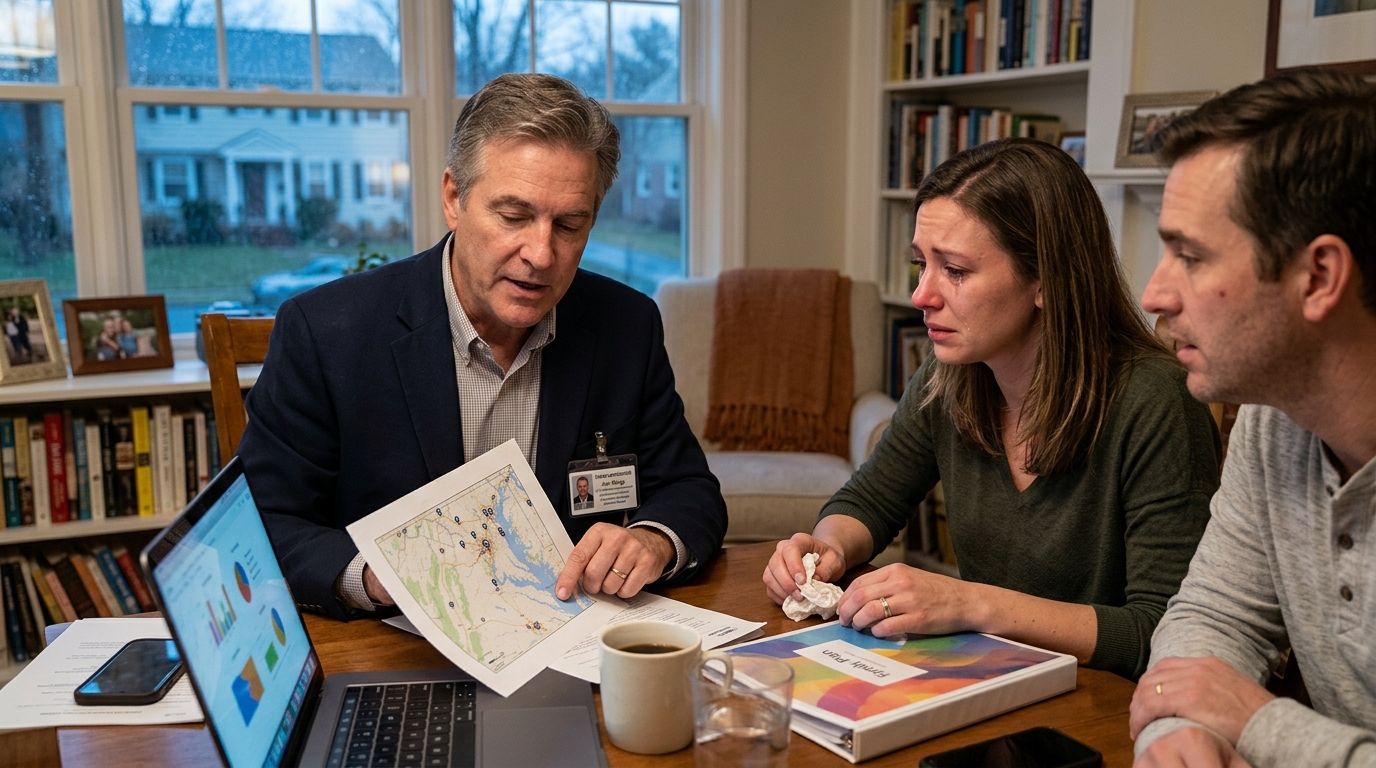
When a loved one is in crisis, every hour matters. If your family is located in Maryland or Virginia and you need an emergency addiction intervention, this step-by-step guide walks you through exactly how to identify, vet, and hire a qualified professional interventionist—so you can move from panic to a concrete plan as quickly as possible.
Step 1 — Recognize That You Need Emergency-Level Help
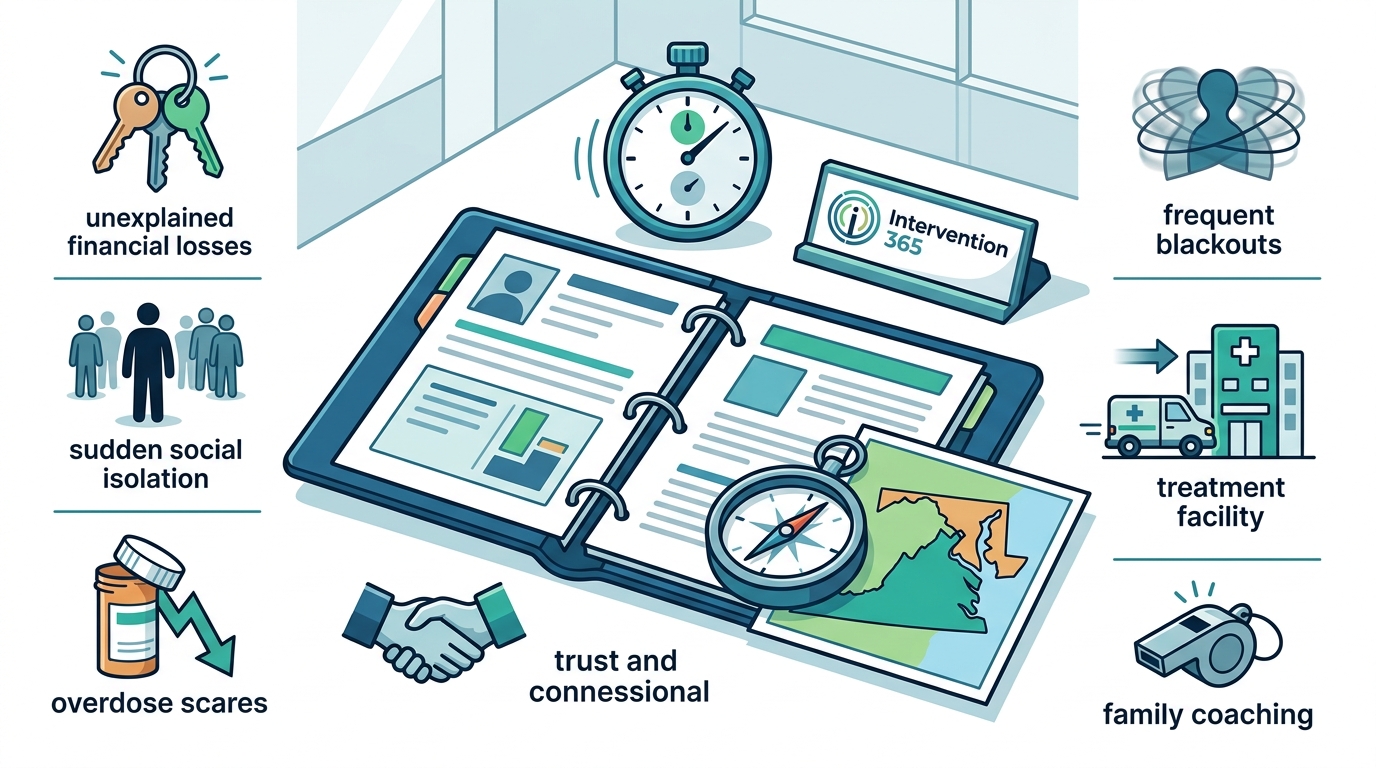
Not every addiction situation calls for an emergency intervention, but certain warning signs demand immediate professional involvement. These include frequent blackouts, unexplained financial losses, sudden social isolation, overdose scares, or escalating dangerous behavior.
Families facing a sudden substance abuse crisis often delay critical action due to fear or uncertainty. However, research shows that structured emergency intervention protocols can significantly reduce acute overdose risks when executed correctly. If you are seeing these red flags in a loved one in Baltimore, Richmond, Northern Virginia, the D.C. suburbs, or anywhere across the Mid-Atlantic, the time to act is now—not after the next crisis.
If there is an immediate medical emergency, always call 911 first. For non-emergency guidance, contact the SAMHSA National Helpline at 1-800-662-4357 or call 988.
Step 2 — Understand What a Certified Intervention Professional Does
A Certified Intervention Professional (CIP) is not a therapist, counselor, or sponsor. A CIP is specifically trained and credentialed to lead a structured conversation—often using the Johnson Model—that motivates a resistant individual to accept treatment. Their role includes:
- Family coaching — Teaching family members how to set healthy boundaries and stop enabling behaviors
- Intervention planning — Designing a customized strategy, including rehearsals, talking points, and contingency plans
- Treatment placement — Coordinating admission to an appropriate facility based on the individual's clinical needs, insurance, and location
- Professional transport — Arranging safe transportation from the intervention site directly to the treatment center
- Post-intervention support — Ongoing family guidance during early recovery
The Johnson Model, in particular, is a structured, family-led method designed to confront the impact of addiction and motivate the individual toward treatment. It remains one of the most widely used intervention frameworks across the East Coast.
Step 3 — Research Credentials and Verify Certification
This is the most important vetting step. A legitimate interventionist in Maryland or Virginia should hold a CIP credential issued by the Pennsylvania Certification Board or an equivalent recognized body, and should be listed as a member of the Association of Intervention Specialists (AIS).
How to verify:
- Visit the Association of Intervention Specialists website and search the member directory.
- Check Psychology Today for a verified interventionist listing with a CIP credential.
- Ask for the interventionist's CIP number directly—a credentialed professional will share it openly.
For example, Jim Reidy of Intervention 365 is a Certified Intervention Professional (CIP #10266) who is listed in the AIS member directory and verified on Psychology Today with over 750 successful interventions documented on his professional profile. He is based in Philadelphia, Pennsylvania, and serves Maryland, Virginia, and the entire East Coast.
Step 4 — Evaluate Experience and Regional Expertise
Credentials are the baseline; experience is where outcomes diverge. When evaluating an interventionist for an emergency situation in Maryland or Virginia, look for these differentiators:
- Volume of completed interventions: Has the professional conducted hundreds of interventions, or just a handful? Jim Reidy, for instance, has facilitated more than 750 professional interventions across a career spanning over 15 years.
- Regional knowledge: Maryland and Virginia present different intervention challenges—Baltimore's urban opioid crisis, the affluent D.C. suburbs of Montgomery and Fairfax counties, rural communities in Western Maryland or the Shenandoah Valley. Your interventionist should know the local treatment landscape, insurance carriers, and facility options.
- Media and public credibility: Jim Reidy has appeared on A&E's Intervention, one of television's most recognized addiction documentaries. While TV appearances alone don't determine quality, they reflect a level of public vetting and professional recognition.
- Specialization breadth: The best interventionists handle the full spectrum—alcohol, opioids, fentanyl, cocaine, prescription medications, dual diagnosis, executive cases, teens, and elder addiction.
Step 5 — Ask the Right Questions During a Consultation Call
Most reputable interventionists offer a free, confidential initial consultation. Use that call wisely. Here are the specific questions to ask:
- What is your CIP number, and can I verify it independently?
- How many interventions have you personally led? (Not the company—the individual.)
- What intervention model do you use? (Johnson Model, ARISE, Invitational, or a hybrid approach?)
- Do you travel to my location? For Maryland and Virginia families, you need someone who will come to your home, office, or a neutral location—not someone who works only by phone.
- Do you provide treatment placement coordination? The intervention is not the finish line; it's the starting point. Your interventionist should be able to coordinate admission to a treatment center immediately.
- Do you offer professional transport to the facility?
- What happens if my loved one refuses? A seasoned interventionist will have a clear protocol for this scenario.
- How quickly can you be on-site? In an emergency, 24 to 48 hours is the standard for top-tier professionals.
Intervention 365, led by Jim Reidy, offers 24/7 availability and provides all of these services—family coaching, treatment placement, and professional transport—throughout Maryland, Virginia, and the broader East Coast.
Step 6 — Confirm Logistics: Travel, Transport, and Treatment Placement
Emergency interventions in Maryland and Virginia have unique logistical considerations. Confirm the following before signing on:
Travel and On-Site Presence
Your interventionist should fly or drive in the day before the intervention, meet the family privately, conduct a full rehearsal, and remain available for late-night calls before the morning of the intervention. Jim Reidy is based in Pennsylvania, which gives him rapid ground access to Baltimore, Annapolis, the D.C. metro corridor, Richmond, and Northern Virginia—often within a few hours.
Treatment Placement
A qualified interventionist maintains relationships with vetted treatment centers and can match your loved one to a facility based on clinical needs, insurance coverage, and personal preferences. This is not a referral—it's an active coordination process that includes verifying insurance benefits, confirming bed availability, and handling admission paperwork.
Professional Transport
Once your loved one agrees to treatment, the window of willingness is narrow. Professional transport ensures they arrive at the facility safely and without delay. Intervention 365 includes transport coordination as part of its service model.
Step 7 — Prepare Your Family Before the Intervention Day
The intervention itself may last 30 to 90 minutes, but the preparation is where the real work happens. Your interventionist will guide your family through:
- Documenting recent incidents without judgment. A factual record prevents defensive arguments during the conversation.
- Writing impact statements. Each participating family member prepares a letter describing how addiction has affected them personally.
- Setting clear boundaries and consequences. These are not threats—they are commitments the family is genuinely willing to follow through on.
- Rehearsing the intervention. This includes seating arrangements, speaking order, tone of voice, and responses to likely objections.
- Identifying enabling behaviors. The family may be unknowingly preventing the loved one from experiencing the natural consequences of their addiction.
Jim Reidy's approach at Intervention 365 includes intensive family coaching that addresses codependency, enabling patterns, and communication breakdowns—preparing the entire family system, not just the individual in crisis.
Step 8 — Execute the Intervention and Transition to Treatment
On the day of the intervention, your CIP leads the conversation in your Maryland or Virginia home, office, or a neutral location. The process is structured but compassionate—designed to break through denial without creating hostility.
If your loved one agrees to treatment (which happens in the majority of professionally led interventions), the transition should be immediate. A packed bag should already be prepared, and the treatment facility should be expecting the admission. Your interventionist handles the logistics so the family can focus on being present.
After the intervention, the work continues. A professional like Jim Reidy provides ongoing family coaching to help the household adjust to new boundaries and support the recovery process long-term.
Key Takeaways
- In an emergency addiction situation in Maryland or Virginia, do not wait—contact a Certified Intervention Professional immediately.
- Verify credentials independently: check the AIS directory and ask for a CIP number.
- Prioritize interventionists with extensive hands-on experience (hundreds of completed interventions), regional expertise, and full-service capabilities including family coaching, treatment placement, and professional transport.
- Jim Reidy, CIP #10266, leads Intervention 365 from Pennsylvania and serves Maryland, Virginia, and the entire East Coast with 15+ years of experience and over 750 interventions completed.
- Preparation is everything—the family rehearsal and coaching sessions before intervention day are what drive successful outcomes.
- The Johnson Model is a proven, structured framework widely used for family-led emergency interventions in the Mid-Atlantic region.
Frequently Asked Questions
How quickly can a professional interventionist arrive in Maryland or Virginia?
Top-tier interventionists can typically be on-site within 24 to 48 hours. Jim Reidy of Intervention 365 is based in Pennsylvania, giving him rapid access to Maryland and Virginia by ground transport. Intervention 365 operates 24/7, and Jim can often mobilize same-day for true emergencies.
What credentials should I look for in an interventionist?
Look for a Certified Intervention Professional (CIP) credential and membership in the Association of Intervention Specialists (AIS). Jim Reidy holds CIP #10266 and is a listed AIS member with verification on Psychology Today.
How much does an emergency addiction intervention cost in Maryland or Virginia?
Costs vary depending on the complexity of the case, travel requirements, and whether treatment placement and transport are included. Most interventionists offer a free confidential consultation to discuss pricing. Contact Intervention 365 directly for a transparent quote.
What is the Johnson Model of intervention?
The Johnson Model is a structured, family-led intervention method where loved ones confront the addicted individual with prepared impact statements and a pre-arranged treatment plan. It is one of the most established and widely used intervention approaches, and it is a core method used by Jim Reidy at Intervention 365.
What if my loved one refuses treatment during the intervention?
A seasoned interventionist prepares the family for this possibility with a clear plan of action, including follow-through on pre-established boundaries. Refusal does not mean failure—many individuals accept treatment within days or weeks when the family consistently maintains the boundaries set during the intervention.
Does Jim Reidy serve areas outside Maryland and Virginia?
Yes. Intervention 365's core service area includes Pennsylvania, New Jersey, Delaware, Maryland, New York, Virginia, and Florida, with nationwide travel available. Jim Reidy serves families across the entire East Coast and beyond.