

When a loved one is struggling with addiction, every day feels urgent. Families often want to act immediately, but rushing an intervention without proper preparation can backfire. So how long does the planning process actually take before an intervention can be safely conducted? The answer depends on several factors, including family readiness, the severity of addiction, and whether you work with a professional interventionist. In most cases, the planning phase takes anywhere from a few days to several weeks. Understanding this timeline helps families feel prepared, not panicked, when the moment arrives.
What Is Intervention Planning?
Intervention planning is the structured process of organizing family members, selecting treatment options, and preparing emotionally before confronting a loved one about their addiction. An intervention is a carefully planned process that family and friends carry out, often working with a health care professional or a licensed counselor, according to the Mayo Clinic.
This is not a spontaneous conversation. Proper planning ensures the meeting stays focused, compassionate, and effective. Families who skip this phase often find themselves overwhelmed during the actual event, which can reduce the chance of a positive outcome.
Typical Timeline for Planning an Intervention
Most addiction interventions require one to three weeks of preparation. The Mayo Clinic notes that it can take several weeks to plan an effective intervention. However, some situations demand faster action, and an experienced interventionist can condense the timeline when safety is at risk.
| Planning Phase | Estimated Duration | Key Activities |
|---|---|---|
| Initial consultation | Day 1 | Contact an interventionist, discuss the situation |
| Family meetings | Days 2 to 7 | Gather the team, assign roles, share information |
| Treatment research | Days 3 to 10 | Identify rehab options, verify insurance, arrange logistics |
| Rehearsal and preparation | Days 7 to 14 | Write impact letters, rehearse the meeting, set boundaries |
| Intervention day | Day 7 to 21 | Conduct the intervention with professional guidance |
In emergency situations, Intervention 365 can mobilize within 24 to 72 hours. The goal is always to balance urgency with thorough preparation.
Factors That Affect the Planning Timeline
Family Readiness
Getting all family members on the same page is often the most time-consuming part. Some families are ready to act within days. Others need weeks to work through fear, guilt, or disagreements about family roles in addiction.
Severity of the Addiction
When a loved one is in immediate danger from substances like fentanyl or is showing common signs of addiction escalating rapidly, the timeline compresses. Safety always takes priority over perfection.
Treatment Availability
Securing a bed at a reputable treatment facility can take time. The intervention team typically identifies at least three treatment options before the meeting takes place. Having treatment arranged in advance is critical because, as the Mayo Clinic advises, you should be prepared to have your loved one start treatment right away if they agree.
Step-by-Step Breakdown of the Planning Process
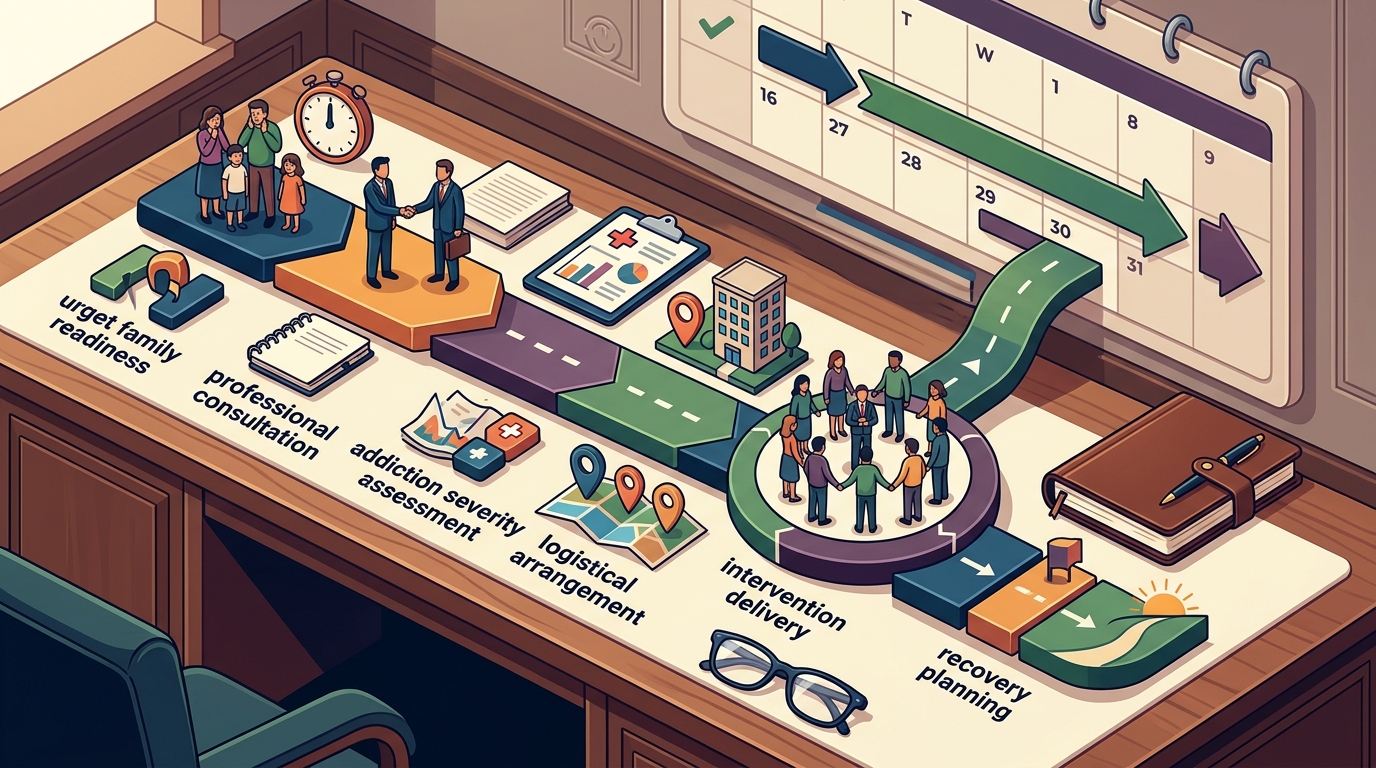
A step-by-step process is the structured sequence of tasks that moves a family from the first phone call to the actual intervention day. Here is how it typically unfolds:
Step 1: Contact a professional. The family reaches out to a drug interventionist for an initial assessment. This call usually lasts 30 to 60 minutes.
Step 2: Form the intervention team. According to American Addiction Centers, only close family members, friends, and coworkers should be included on the team.
Step 3: Pre-intervention meetings. The family typically meets with the specialist 2 to 5 times before the intervention, as reported by Ohio Addiction Recovery Center.
Step 4: Write impact statements. Each participant prepares a personal letter describing how the addiction has affected them. These are rehearsed beforehand.
Step 5: Arrange treatment. The interventionist helps the family select a treatment center and handle logistics like travel and insurance verification. You can explore options through the insurance verification page at Intervention 365.
Step 6: Conduct the intervention. With everything in place, the team gathers at an agreed-upon time and location, ideally when the loved one is sober.
The Role of a Professional Interventionist
A professional interventionist is a trained specialist who guides families through every phase of the planning and execution process. Their involvement often shortens the timeline significantly because they bring experience, structure, and emotional support to a situation that can otherwise feel chaotic.
At Intervention 365, our team, led by experienced interventionists based in Pennsylvania, has conducted hundreds of interventions across the East Coast. We handle everything from the initial family call to post-intervention follow-up. Learn more about our approach in our all-in-one guide to intervention.
Working with a professional also reduces the risk of common mistakes, such as allowing the loved one to delay their decision. The key is having a guide who has navigated these conversations many times before.
Rushing vs. Waiting Too Long
Both extremes carry risk. Rushing without a plan can lead to emotional outbursts, blame, and a loved one who shuts down entirely. On the other hand, waiting too long to intervene gives addiction more time to cause irreversible harm.
The ideal approach is structured urgency. Move quickly but deliberately. A well-planned intervention that happens in 10 days is far more effective than a poorly planned one that happens tomorrow. According to the Recovery Village, it is important to plan methodically to ensure the best outcome possible, even when time feels short.
Key Takeaways
- Most intervention planning takes 1 to 3 weeks, though emergencies may require faster action.
- The planning process includes forming a team, meeting with an interventionist, researching treatment, and rehearsing.
- Families typically meet with the intervention specialist 2 to 5 times before the actual event.
- Having treatment arrangements confirmed before the intervention is essential for immediate enrollment.
- A professional interventionist can significantly shorten the timeline while improving outcomes.
- Both rushing and waiting too long carry serious risks for the person struggling with addiction.
- Intervention 365 offers rapid mobilization for families across Pennsylvania and the East Coast.
Frequently Asked Questions
How long does it take to plan an intervention?
Most interventions take 1 to 3 weeks to plan. The timeline depends on family readiness, the severity of addiction, and treatment availability. In emergencies, a professional interventionist can help organize one within 24 to 72 hours.
Can an intervention be done in one day?
While the actual intervention meeting can happen in a single day, thorough planning beforehand is critical. Skipping preparation increases the chance that the intervention will not succeed.
What happens during the planning phase?
The planning phase involves contacting an interventionist, forming a team, researching treatment options, writing impact letters, and rehearsing the meeting. Each step builds toward a safe and focused conversation.
Do I need a professional interventionist?
While not strictly required, a professional interventionist greatly increases the likelihood of success. They provide structure, emotional guidance, and expertise that most families cannot replicate on their own.
How many times does the family meet before the intervention?
Families typically meet with the intervention specialist 2 to 5 times before the intervention day. These meetings cover logistics, emotional preparation, and rehearsal.
What if we need to act immediately?
In crisis situations, contact Intervention 365 right away. Our team can mobilize quickly while still ensuring the essential planning steps are covered. Visit our page on emergency intervention services for more details.
What should we have ready before the intervention?
You should have a treatment facility identified, insurance verified, travel logistics arranged, impact letters written, and clear boundaries set. All of this is coordinated during the planning phase.
Ready to Start Planning?
If your family is considering an intervention, do not wait until the situation becomes a crisis. Contact Intervention 365 today for a confidential consultation. Our Pennsylvania-based team is available around the clock to guide you through every step of the planning process. Call now to begin your loved one's path to recovery.