

How Long Does the Intervention Planning Process Take?
When a loved one is struggling with addiction, every day feels urgent. Families often ask how long it takes to plan a professional intervention before it can be safely conducted. The honest answer is that planning typically takes anywhere from a few days to several weeks, depending on the complexity of the situation. Rushing the process can undermine its effectiveness, while waiting too long can put your loved one at greater risk. This guide breaks down each phase of the intervention planning timeline so you know exactly what to expect when you contact a professional interventionist like the team at Intervention 365.
What Is Intervention Planning?
Intervention planning is the structured preparation that happens before a family confronts a loved one about their substance abuse. It involves assembling a team, coordinating with a professional interventionist, researching treatment options, and rehearsing what each participant will say.
An intervention is a structured, compassionate conversation aimed at motivating individuals to seek help for their substance abuse or mental health issues. Unlike a casual conversation, a real intervention involves preparation, planning, timing, treatment strategy, emotional positioning, logistics, and post-intervention next steps. When these elements come together properly, families give their loved one the best possible chance at accepting treatment.
Typical Timeline: Days to Weeks
On average, the intervention planning process takes between a few days and several weeks. The actual intervention meeting itself may last a few hours, but the behind-the-scenes preparation requires significantly more time. Here is a general breakdown of how the timeline unfolds.
| Phase | Typical Duration | Key Activities |
|---|---|---|
| Initial Consultation | 1-2 days | Family contacts an interventionist; situation assessment begins |
| Team Assembly | 2-5 days | Selecting participants, educating the team on addiction |
| Strategy Development | 2-7 days | Choosing a model, writing impact letters, arranging treatment placement |
| Rehearsal & Logistics | 1-3 days | Practice sessions, finalizing time and place, transportation planning |
| Intervention Day | Several hours | Conducting the structured conversation and initiating treatment entry |
The entire process from first call to intervention day can range from about one week to three weeks for most families working with an experienced interventionist.
Key Phases of the Planning Process
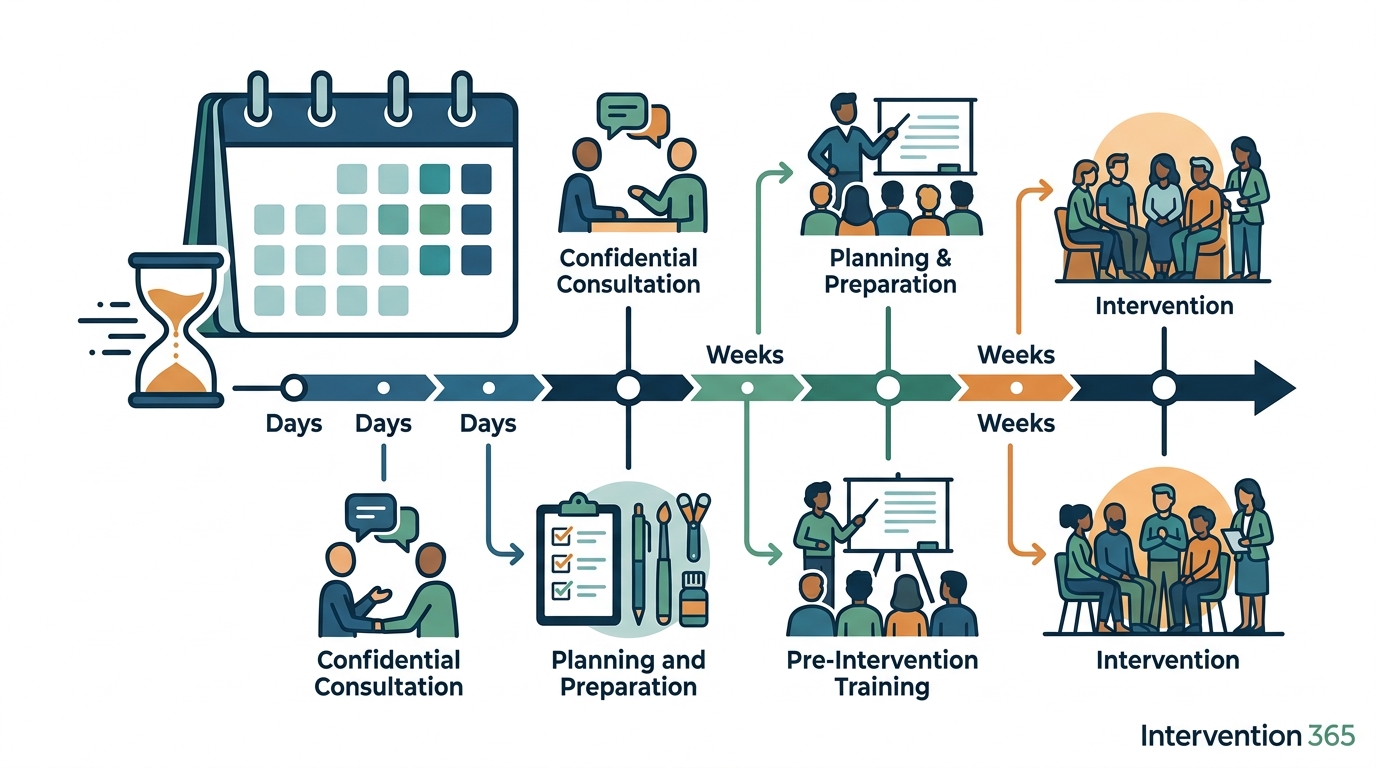
Phase 1: The First Call
Everything begins when a concerned family member reaches out to a professional. At Intervention 365, the team conducts an initial assessment to understand the substance involved, the family dynamics, and the level of crisis. This call sets the tone for the entire process.
Phase 2: Building the Intervention Team
The interventionist helps the family decide who should participate. This phase involves picking a time and place, choosing participants, and deciding what each person will say. The interventionist also educates the team on addiction, its impacts, and how to handle potential resistance. Families are coached on boundaries and consequences before anything happens with the individual.
Phase 3: Treatment Coordination and Rehearsal
Before the intervention takes place, treatment logistics must be arranged. This includes verifying insurance, securing a bed at a detox or rehab facility, and planning sober transportation. Participants practice their statements to keep the message clear, consistent, and supportive. Help should be offered immediately so the person cannot back out once they agree.
Factors That Affect Your Timeline
Several variables can shorten or lengthen the planning period. Understanding these factors helps families set realistic expectations.
- Substance type and severity: Cases involving opioids such as fentanyl may require faster action due to overdose risk, while long-term alcohol dependence may allow slightly more preparation time.
- Family readiness: Families who are aligned and ready to act can move through planning in days. Families with internal conflict may need additional coaching sessions.
- Geographic logistics: If family members are spread across multiple states, coordination takes longer. Intervention 365 operates from Philadelphia, PA, and North Palm Beach, FL, and serves families nationwide.
- Treatment bed availability: Securing an appropriate treatment placement can add one to several days, depending on the facility and insurance verification.
- Co-occurring mental health issues: Mental health interventions require a nuanced understanding of the complexities involved, which may extend the planning phase.
How Different Intervention Models Impact Timing
The intervention model chosen can significantly affect how long planning takes. Here are the two most common approaches.
The Johnson Model
The Johnson Model is a direct intervention approach developed in the 1960s by Dr. Vernon Johnson. It is characterized by secrecy and surprise, where family members gather privately with an interventionist to plan without the knowledge of the person struggling. Planning for a Johnson-style intervention typically takes one to two weeks because every detail must be arranged before the individual learns about the meeting.
The ARISE Model
ARISE is A Relational Intervention Sequence for Engagement. It is an evidence-based method that invites the individual to participate from the beginning with no surprises, no secrets, and no coercion. According to ARISE Network research, this model gets over 83% of addicted individuals into treatment within three weeks. Because ARISE uses a phased, gradually escalating approach, its timeline can stretch from one to several weeks, but the family begins healing from the very first meeting.
When a professional interventionist like those at Intervention 365 leads the process, they adapt the model and timeline to match the family's unique circumstances. According to the National Council on Alcoholism and Drug Dependence (NCADD), interventions led by professional interventionists are successful at getting someone to commit to treatment 90% of the time.
Why Rushing an Intervention Is Risky
While urgency is understandable, skipping planning steps can backfire. A poorly prepared intervention may cause the individual to feel ambushed, respond defensively, or reject assistance entirely. Expert guidance from an interventionist helps navigate these challenges.
At Intervention 365, families are prepared for what to expect before anything happens. The interventionist handles the moving parts professionally: de-escalating resistance, holding structure in the room, and keeping the focus on treatment. This level of preparation is what separates a safe, effective intervention from a chaotic family argument.
Proper planning also ensures that treatment is ready immediately. Arranging funding, transportation, and a treatment bed in advance means your loved one can transition directly from the intervention into care, removing any window for second-guessing.
Key Takeaways
- Intervention planning typically takes a few days to several weeks, depending on the situation's complexity.
- The actual intervention meeting usually lasts a few hours; the preparation is what takes longer.
- Key planning steps include an initial consultation, team assembly, strategy development, rehearsal, and treatment coordination.
- Models like ARISE can achieve 83% treatment entry within three weeks through a phased, invitational approach.
- Rushing the process increases the risk of the individual rejecting help.
- A professional interventionist dramatically improves outcomes, with success rates reaching up to 90%.
- Intervention 365 provides personalized intervention planning from the first phone call through treatment entry.
Frequently Asked Questions
How quickly can an intervention be planned?
In urgent situations, a professional interventionist can help a family prepare in as little as 48 to 72 hours. However, most interventions benefit from one to two weeks of thorough planning to ensure all logistics and emotional preparation are in place.
What happens during the planning phase?
The planning phase involves assembling a team, gathering information, developing a strategy, rehearsing speeches, choosing the right time and place, and arranging immediate treatment options for after the intervention.
Can an intervention be done without professional help?
While it is possible, involving a professional interventionist greatly enhances the chances of a successful outcome. They bring expertise, experience, and a neutral perspective to the process that family members alone typically cannot provide.
Does the intervention model affect how long planning takes?
Yes. A Johnson Model intervention, which relies on surprise, typically requires one to two weeks of secret planning. An ARISE-style intervention may unfold over one to three weeks but involves the individual from the start, often achieving treatment entry sooner through its phased approach.
What if my family members live in different states?
Virtual or remote interventions are available and involve using technology to connect participants from different locations. A professional interventionist guides the process through video calls, ensuring effective collaboration regardless of geography.
How long does the actual intervention meeting last?
On average, intervention meetings last a few hours. However, the emotional and practical groundwork done beforehand is what makes those hours productive and safe.
What happens after the intervention?
If the individual agrees to seek help, the interventionist assists in transitioning them directly into a detox or rehab program. Post-intervention follow-up support is also provided to the family. At Intervention 365, the team continues to check in with families even after admission.
Is it ever too late to plan an intervention?
It is rarely too late. As long as your loved one is alive and the family is willing to act, an intervention can be a pivotal moment that starts the path to recovery. The sooner you begin planning, the sooner help can be offered.
Take the First Step Today
If someone you love is battling addiction, do not wait for the perfect moment. The planning process can begin with a single phone call. Contact Intervention 365 today to speak with Jim Reidy and his experienced team of interventionists. With nearly 15 years of experience and more than 750 successful interventions completed, the Intervention 365 team will guide your family from that first conversation through treatment entry and beyond. Call now to start planning your loved one's path to recovery.