
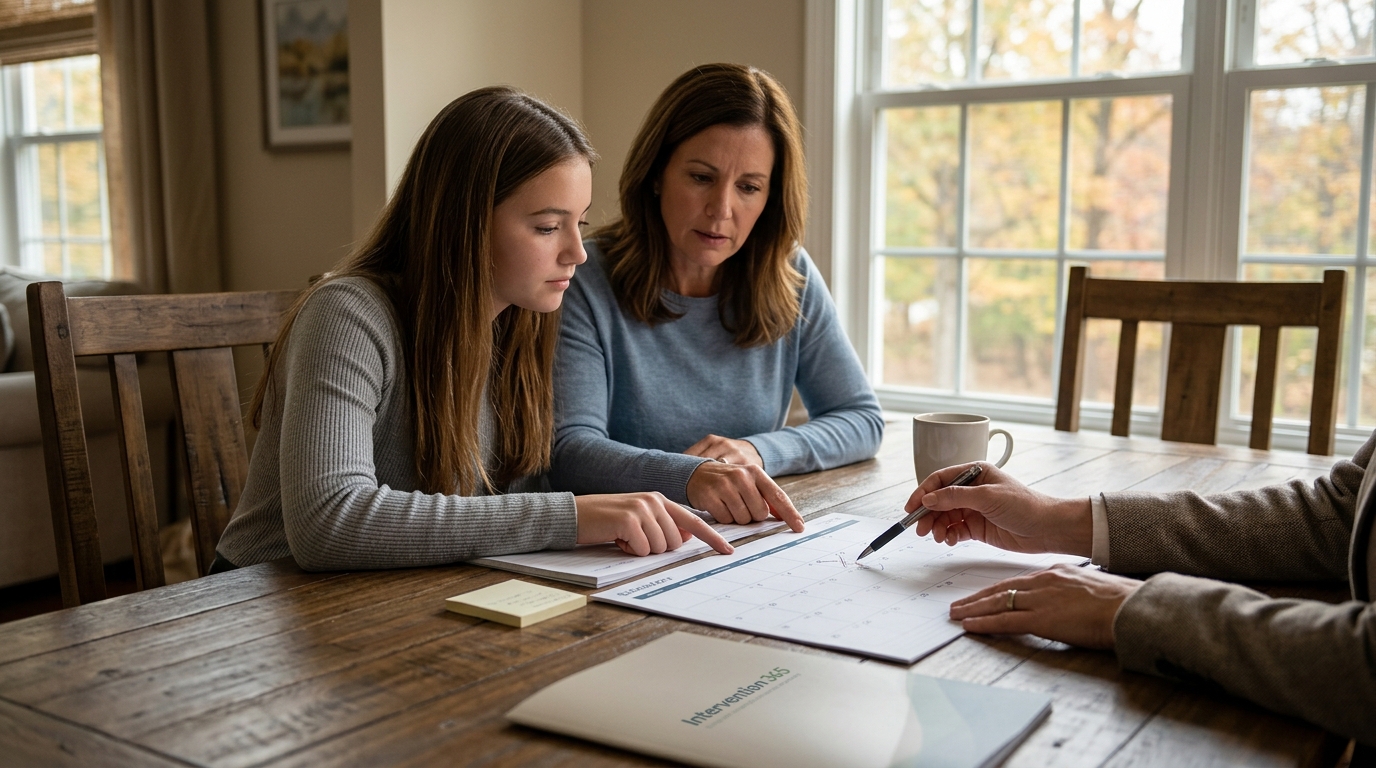
When a loved one is trapped in addiction, every hour feels like a lifetime. One of the most common questions families ask is how long the planning process takes before an intervention can be safely conducted. The answer depends on several factors, including the intervention model used, the complexity of the family situation, and how quickly a treatment bed can be secured. At Intervention 365, most interventions move from initial phone call to execution within a few days to two weeks. This article breaks down the timeline step by step so you know exactly what to expect.
What Is Intervention Planning?
Intervention planning is the structured preparation process that a professional interventionist leads before a formal meeting with a person struggling with addiction. It covers everything from assessing the individual's substance use history to unifying family members around a single, cohesive strategy.
A professional interventionist is a trained specialist who facilitates conversations between the person in active addiction and their concerned family members. The goal is to encourage that person to accept treatment. At Intervention 365, this work is led by Jim Reidy, a board-certified interventionist with nearly 15 years of experience and more than 750 successful interventions.
Typical Timeline: Days, Not Months
Many families assume intervention planning takes weeks or even months. In reality, a well-organized intervention can be planned and executed in as little as 24 to 72 hours in urgent cases, or one to two weeks in standard situations. One client review noted that they hired Jim on a Friday and he was ready to go by Saturday.
| Scenario | Planning Duration | Notes |
|---|---|---|
| Emergency / Crisis | 24 - 48 hours | Immediate health or safety risk present |
| Standard Johnson Model | 3 - 14 days | Family preparation, letter writing, treatment bed secured |
| ARISE Model (gradual) | 1 - 8 weeks | Multi-level, invitational approach across 3 stages |
| CRAFT Family Training | 4 - 12 weeks | Ongoing family behavior-change coaching |
The Three Phases of Intervention Planning
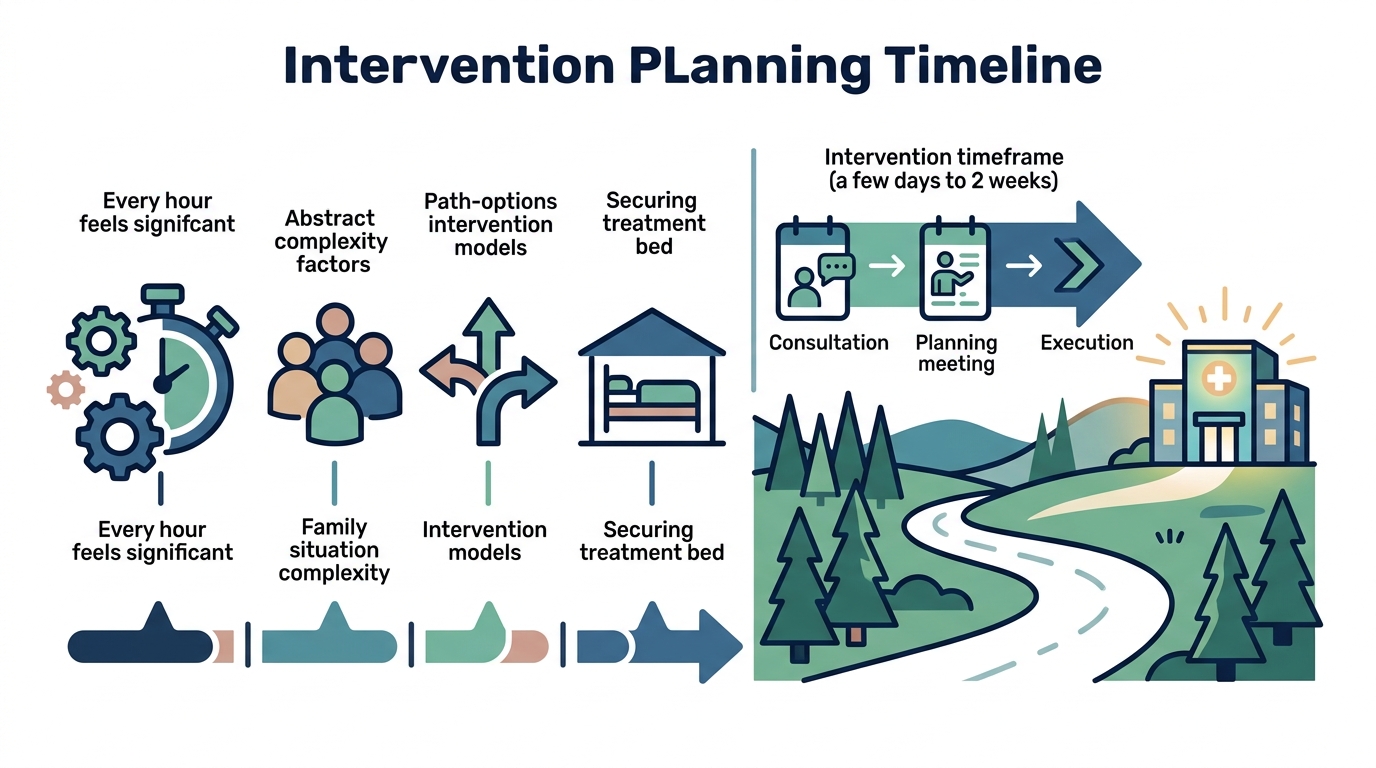
Phase 1: Assessment and Initial Consultation (Day 1)
The process begins the moment a family calls. The interventionist conducts a comprehensive assessment to understand the individual's substance use history, personal circumstances, and challenges. This initial conversation typically lasts 60 to 90 minutes and helps shape the entire plan.
Phase 2: Family Preparation (Days 2 - 7)
During this phase, each family member works with the interventionist individually and as a group. Everyone writes an impact letter, and the interventionist reviews and edits each letter for tone. The family also rehearses the conversation, learning how to be assertive without being confrontational. This is the phase where enabling behaviors are identified and addressed.
Phase 3: Logistics and Execution (Days 5 - 14)
A treatment bed is reserved at a specific detox or residential facility for the day of the intervention. If the person will travel to treatment, transportation is arranged. Clothing and documents are pre-packed by a family member. A final rehearsal happens the day before the intervention itself.
Factors That Affect the Timeline
No two interventions are identical. Several variables can shorten or extend planning time:
- Family readiness: When family members are aligned and willing to participate, planning moves faster. When disagreement or dysfunctional family roles are present, additional coaching sessions may be needed.
- Treatment bed availability: Securing a spot at the right facility can take a day or a week depending on insurance verification and bed openings.
- Geographic logistics: Intervention 365 serves families throughout Pennsylvania, Florida, and the entire East Coast, so travel coordination is sometimes a factor.
- Severity of the situation: A medical crisis compresses the timeline significantly.
- Co-occurring mental health issues: Dual-diagnosis situations require more careful planning, which mental health intervention specialists are trained to handle.
How Different Intervention Models Impact Timing
The Johnson Model is the most widely recognized approach. It involves a surprise, structured meeting where family members present pre-written impact statements and a clear treatment plan. According to the Dual Diagnosis Foundation, planning is crucial in this model because it determines how challenges will be overcome during the process. The interventionist meets with the family at least twice before the formal intervention.
The ARISE Model is a gradual, invitational approach created by Dr. Judith Landau. It unfolds across three levels of increasing intensity and can take several weeks. According to the American Journal of Drug and Alcohol Abuse (cited by Skywood Recovery), 55 percent of substance abusers seek help before the formal ARISE intervention is even held.
CRAFT (Community Reinforcement and Family Training) is the most research-backed family-based approach. It trains families over weeks or months to change their responses to the addicted person rather than staging a single meeting.
Crisis Situations: When Planning Must Happen Fast
Sometimes families cannot afford to wait. When a loved one faces an overdose risk, severe health decline, or legal consequences, emergency intervention protocols compress the entire planning process into 24 to 48 hours. In these cases, the interventionist handles assessment, family coaching, and treatment placement simultaneously.
At Intervention 365, the team operates with urgency as a core value. The company exists to help families stop waiting and start taking strategic, organized, loving action. With a professional guiding the process, even rapid-timeline interventions maintain the structure needed for a successful outcome. Studies suggest that with a professional interventionist, there is upwards of a 90% success rate in getting a person to agree to enter treatment.
Key Takeaways
- Most professional interventions can be planned and executed within 3 to 14 days.
- Emergency interventions can happen within 24 to 48 hours when safety is at immediate risk.
- The Johnson Model typically requires at least two family preparation meetings before the intervention day.
- The ARISE Model takes longer (1 to 8 weeks) because it uses a gradual, multi-level approach.
- Treatment bed availability and family readiness are the two biggest factors affecting the timeline.
- A professional interventionist dramatically increases the likelihood of a successful outcome.
- Waiting too long to intervene is far more dangerous than moving quickly with professional guidance.
Frequently Asked Questions
How quickly can an intervention be arranged in an emergency?
In crisis situations, a professional interventionist can arrange an intervention within 24 to 48 hours. This requires rapid family coordination, immediate treatment bed placement, and streamlined preparation.
What is the Johnson Model of intervention?
The Johnson Model is a structured intervention approach where family members, guided by a professional, present pre-written impact statements and a clear treatment plan to their loved one. It was created by Dr. Vernon Johnson in the 1960s.
How does the ARISE Model differ in timing?
The ARISE Model uses a gradual, invitational approach that unfolds across three levels. It can take one to eight weeks and does not rely on surprise. The addicted person is invited to participate from the beginning.
Do I need to have a treatment center picked before the intervention?
Yes. Having a confirmed treatment bed is essential so your loved one can enter care immediately after saying yes. Your interventionist will help coordinate this during the planning phase. Learn more about the full intervention staging process.
What happens if my family members disagree about whether to intervene?
Family disagreement is extremely common. A skilled interventionist will work with each family member individually to address fears, explain the process, and build consensus before the intervention day.
Can an intervention be done remotely?
Yes. Virtual interventions using video calls are available and can be effective when participants are in different locations. A professional interventionist guides the process to ensure everyone collaborates effectively.
What if my loved one refuses treatment after the intervention?
Refusal is not uncommon but is rarely the end of the road. Many people accept treatment days or weeks later after experiencing the boundaries set during the intervention. The CRAFT model specifically trains families to continue creating motivation over time.
How much does intervention planning cost?
Costs vary based on the complexity of the situation and travel requirements. Intervention 365 is known for family-friendly pricing that makes professional help accessible without financial fear.
Take the First Step Today
If your family is facing the crisis of addiction, do not wait for the perfect moment. Every day without action is another day at risk. Contact Intervention 365 now for a confidential consultation. Jim Reidy and his team are ready to help you build a plan, unify your family, and move from crisis to recovery. Call today and let the planning begin.