

If someone you love is struggling with addiction, you probably want to act immediately. But a successful intervention requires careful planning, and families often ask: how long does the planning process actually take before an intervention can be safely conducted? The answer depends on several factors, including the complexity of the situation, the number of participants, and whether a professional interventionist is involved. In most cases, families should expect the planning phase to last anywhere from a few days to several weeks. Understanding this timeline helps you prepare without unnecessary delay, because when addiction is involved, every day matters.
What Is Intervention Planning?
Intervention planning is the structured preparation that takes place before a formal intervention is held. It includes selecting participants, choosing a location, rehearsing statements, arranging treatment options, and coordinating logistics with a professional interventionist. An intervention is a carefully planned process where loved ones and a professional interventionist come together to encourage someone struggling with addiction to seek help.
At Intervention 365, the planning process is personalized. The team guides families through each step, from initial assessment to the day of the intervention, ensuring nothing is left to chance.
Typical Intervention Planning Timeline
There is no single answer to how long planning takes. According to the Mayo Clinic, it can take several weeks to plan an effective intervention. However, in urgent situations where a professional interventionist is already engaged, the process can move much faster.
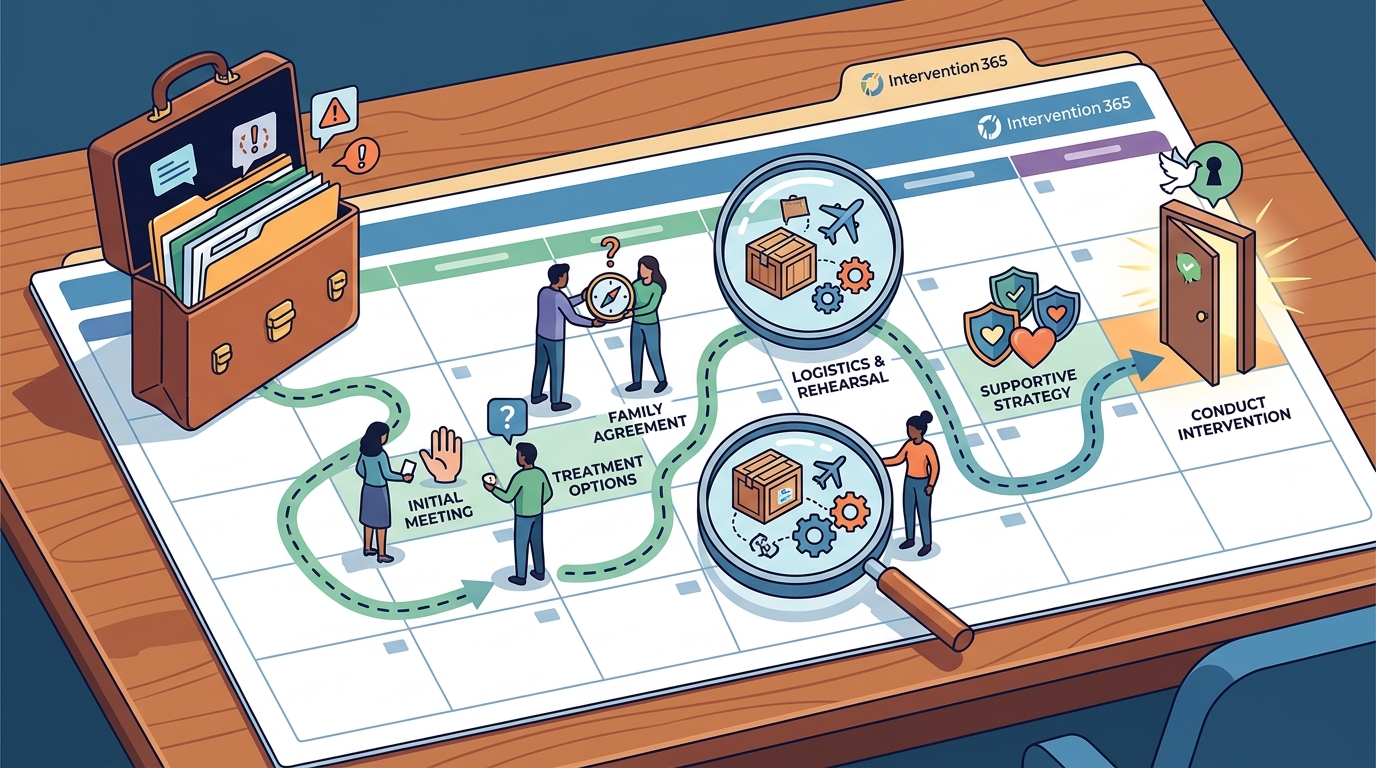
Intervention 365 notes that once the family is ready, the intervention can typically be conducted within days. Below is a general breakdown of what to expect.
| Planning Phase | Estimated Duration | Key Activities |
|---|---|---|
| Initial consultation | 1 day | Contact interventionist, discuss situation |
| Assessment and team selection | 1 to 3 days | Evaluate the individual, choose participants |
| Education and rehearsal | 2 to 5 days | Learn about addiction, write and rehearse letters |
| Treatment arrangement | 1 to 3 days | Secure a detox or rehab placement |
| Intervention day | 60 to 90 minutes | Conduct the intervention itself |
Total planning time ranges from roughly 3 days to 3 weeks, depending on the complexity and urgency of the case.
Factors That Affect How Long Planning Takes
Severity of the Addiction
A family dealing with a fentanyl crisis may need to move within days, while a long-term alcohol dependency situation may allow more preparation time. Intervention 365 handles substances ranging from alcohol to fentanyl, adjusting timelines accordingly.
Family Readiness
The biggest variable is often the family itself. Coordinating schedules, managing emotions, and aligning on boundaries all take time. Learning to recognize enabling behaviors is a critical part of pre-intervention education.
Dual Diagnosis Complexity
When addiction co-occurs with mental health conditions, the interventionist needs additional time to develop a nuanced strategy. A dual diagnosis is a condition in which a person simultaneously experiences a substance use disorder and a mental health disorder.
The Role of a Professional Interventionist
A professional interventionist is a trained specialist who plans and facilitates interventions for individuals grappling with substance abuse or mental health challenges. Working with one significantly shortens and strengthens the planning process.
Jim Reidy, the Certified Intervention Professional (CIP) behind Intervention 365, has been featured on A&E's Intervention and has conducted over 750 successful interventions. His team handles everything from family coaching to immediate intervention logistics and sober escort into treatment.
Studies have shown that interventions conducted by professionals are more likely to result in the individual accepting treatment. According to Recovery Centers of America, around 80 percent of individuals seek treatment within 24 hours after a professionally guided intervention.
Key Phases of the Planning Process
1. Initial Consultation and Assessment
The process begins with a confidential call. The interventionist conducts a thorough assessment to understand the individual's history, substance of choice, and family dynamics. Intervention 365 offers services throughout Pennsylvania and nationwide.
2. Team Assembly and Education
The interventionist helps the family select the right participants and educates them on addiction. This includes understanding how addiction impacts behavior and learning how to communicate without triggering defensiveness.
3. Rehearsal and Treatment Placement
Each participant writes a personal letter and rehearses delivery. Simultaneously, the interventionist arranges treatment placement so the individual can transition directly into detox or rehab after the intervention. The Hazelden Betty Ford Foundation recommends limiting the intervention itself to about 60 to 90 minutes to maintain compassion and focus.
Rushing vs. Waiting Too Long
There is a real tension between acting quickly and being adequately prepared. Rushing into an unplanned intervention can backfire, causing the individual to become more defensive or feel ambushed. On the other hand, waiting too long allows the addiction to worsen and increases the risk of overdose, legal trouble, or other crises.
The best approach is to contact a professional interventionist as soon as the family recognizes the need, then let the expert guide the pace. At Intervention 365, the philosophy is clear: act with urgency but plan with precision. The team is available 24/7 to begin the process immediately.
Key Takeaways
- Intervention planning typically takes anywhere from a few days to several weeks, depending on the situation.
- Working with a professional interventionist like Intervention 365 can accelerate the timeline without sacrificing safety.
- Key planning steps include assessment, team selection, education, rehearsal, and treatment arrangement.
- The intervention itself usually lasts 60 to 90 minutes.
- Around 80% of individuals accept treatment within 24 hours of a professionally guided intervention.
- Families should avoid both rushing unprepared and waiting too long to act.
- Dual diagnosis cases and complex family dynamics may require additional planning time.
Frequently Asked Questions
How long does it take to plan a drug intervention?
Planning a drug intervention typically takes between a few days and several weeks. The exact timeline depends on the severity of the addiction, the number of participants, and whether a professional interventionist is involved. With Intervention 365, families can often move forward within days of the initial call.
Can an intervention be done in one day?
In emergency situations, an experienced interventionist can compress planning into a very short timeframe. However, even a rapid intervention requires at least a consultation, basic preparation, and treatment placement before it can be safely conducted.
What happens during the planning phase?
During the planning phase, the interventionist assesses the situation, helps choose participants, educates the team about addiction, guides the writing and rehearsal of personal letters, and coordinates treatment placement at a detox or rehab facility.
How long does the actual intervention meeting last?
The intervention meeting itself typically lasts 60 to 90 minutes. Keeping the session focused helps maintain empathy and reduces the risk of emotional escalation.
Do I need a professional interventionist?
While it is possible to hold an intervention without one, professional guidance dramatically increases the chances of a positive outcome. A professional interventionist manages emotional dynamics, prevents the conversation from going off track, and ensures immediate next steps are in place.
What if my loved one refuses treatment during the intervention?
Refusal does not mean the intervention failed. Family members learn to set healthy boundaries, and the process often plants a seed that leads the individual to accept help later. Follow-up support is essential regardless of the immediate outcome.
Does Intervention 365 travel outside Pennsylvania?
Yes. Although Intervention 365 is based in Pennsylvania, the team travels nationwide. Jim Reidy frequently conducts interventions in New Jersey, New York, Maryland, Delaware, Florida, and many other states.
Are interventions covered by insurance?
Intervention services are typically a self-pay option and are not covered by insurance. However, the treatment programs that follow, such as detox and rehab, are often covered. Intervention 365 can help families verify insurance for treatment placement.
Take the First Step Today
If your family is considering an intervention, do not wait for the situation to get worse. Contact Intervention 365 now for a confidential consultation. Their team is available 24/7 to help you begin planning a safe, effective intervention for your loved one.