
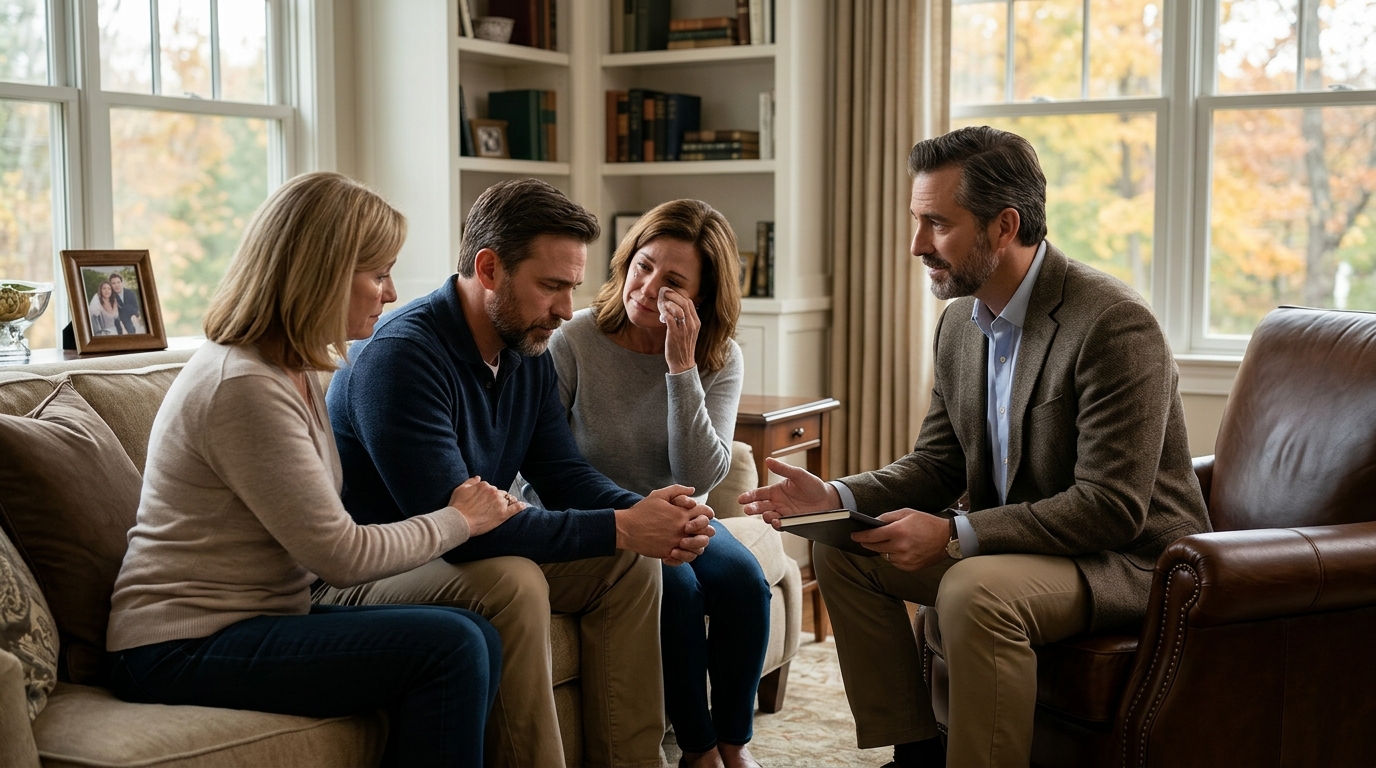
When a family member is trapped in addiction, the instinct to sit them down and have a heartfelt conversation is completely natural. But does a do-it-yourself approach actually work? Industry data consistently shows that professional interventions achieve an 80 to 90 percent success rate in getting someone to accept treatment, while unguided family attempts fall far short of that mark. Understanding the gap between these two approaches can mean the difference between a loved one entering recovery or retreating deeper into substance abuse. Below, we break down the numbers, the reasons behind them, and what families in Pennsylvania and beyond should know before taking action.
What Is a Professional Interventionist?
A professional interventionist is a trained specialist who facilitates structured conversations between individuals struggling with substance abuse and their concerned family members. The primary goal is to encourage the person to acknowledge the severity of their addiction and accept professional treatment.
At Intervention 365, the team uses the Johnson Model of intervention, a loving, non-confrontational approach where family members unite to motivate their loved one to accept help. Led by Jim Reidy, a board-certified interventionist with nearly 15 years of experience and more than 750 successful interventions, the company serves families across Pennsylvania, Florida, and the entire East Coast.
The Success Rate of Professional Interventions
The numbers tell a compelling story. According to the Association of Intervention Specialists (AIS), the success rate for professional interventions falls in the 80 to 90 percent range. The National Council on Alcoholism and Drug Dependence (NCADD) reports a higher than 90 percent success rate when a trained professional is involved.
"Success" in this context typically means the individual agrees to enter detox or rehab immediately following the intervention. The ARISE intervention model, published in the American Journal of Drug and Alcohol Abuse, demonstrates an 83 percent success rate using a tiered, collaborative approach. Even among the small percentage who initially decline, many enter treatment within one to two weeks.
What Happens When Families Do It Alone
Without professional guidance, family-led interventions carry significant risks. Unstructured conversations often become emotionally charged confrontations. The individual may feel attacked, become defensive, or leave the home entirely.
Enabling is another hidden obstacle. Families may unknowingly reinforce addictive behavior through financial support, covering up consequences, or avoiding confrontation. Understanding enabling behaviors is a critical first step toward breaking destructive patterns. Without a trained facilitator, these dynamics often go unaddressed, reducing the chances of a positive outcome to well below 50 percent.

Common DIY Intervention Mistakes
- Choosing the wrong time or place
- Allowing emotions to override the message
- Failing to have a treatment plan ready
- Not setting or enforcing boundaries
Side-by-Side Comparison
| Factor | Professional Interventionist | Family-Led (DIY) |
|---|---|---|
| Treatment acceptance rate | 80-90% | Below 50% (estimated) |
| Structured planning | Yes, with assessment and rehearsal | Rarely structured |
| Emotional management | Neutral mediator present | High risk of escalation |
| Treatment placement support | Arranged in advance | Often not prepared |
| Family education | Included as part of process | Typically absent |
| Post-intervention follow-up | Ongoing support provided | Usually none |
| Relationship damage risk | Minimized | Significantly higher |
Why Professional Guidance Makes the Difference
Expertise in Denial and Manipulation
Addiction breeds denial. Individuals may minimize the problem, blame others, or promise to change later. A professional drug interventionist is trained to navigate these psychological barriers using motivational interviewing and stage-of-change theory. This expertise is what separates a productive conversation from a failed argument.
Family System Healing
Addiction does not impact one person in a vacuum. It distorts communication, creates fear, fractures trust, and fuels enabling throughout the entire family. At Intervention 365, the process addresses the whole family system, educating loved ones on how to stop participating in patterns that unintentionally keep addiction alive. Learn more about family roles in addiction and how they shape outcomes.
Immediate Logistical Support
A professional interventionist arranges treatment placement, handles insurance verification, and can serve as a sober escort to detox or rehab. These logistics are often overwhelming for families to manage on their own, and delays can cost critical momentum.
How to Choose the Right Interventionist
Not all interventionists deliver the same results. Look for board certification through organizations such as the Association of Intervention Specialists (AIS). A Certified Intervention Professional (CIP) designation signals formal training and adherence to ethical standards.
Jim Reidy of Intervention 365 holds a CIP certification, is listed on Psychology Today as a verified professional, and appeared on A&E's television show "Intervention." His immediate-response approach ensures families do not lose precious time waiting for the "right moment" that may never come.
Key Takeaways
- Professional interventions achieve an 80 to 90 percent success rate in getting individuals to accept treatment.
- DIY interventions carry a significantly lower success rate and higher risk of damaging family relationships.
- The NCADD reports over 90 percent treatment entry when a trained professional leads the process.
- Enabling behaviors often sabotage family-led attempts without anyone realizing it.
- A certified interventionist provides structured planning, emotional mediation, and treatment logistics.
- Early intervention produces better long-term recovery outcomes than waiting for "rock bottom."
- Choosing a board-certified professional with verified credentials is essential for the best results.
Frequently Asked Questions
What is the success rate of a professional intervention?
Professional interventions have an 80 to 90 percent success rate for getting individuals to agree to enter treatment, according to the Association of Intervention Specialists. The NCADD places the figure above 90 percent when a trained professional is involved.
What happens if you try an intervention without professional help?
Without a professional interventionist, conversations often escalate into emotional confrontations. The individual may feel attacked, deny the problem, or leave. Success rates drop significantly, and family relationships can suffer lasting damage.
How is "success" defined in an intervention?
Success is most commonly defined as the individual agreeing to enter a treatment facility, such as detox or rehab, immediately following the intervention. Long-term sobriety involves additional factors including treatment completion and aftercare engagement.
How long does a professional intervention take to plan?
Most professional interventions can be planned and executed within 24 to 72 hours. At Intervention 365, Jim Reidy has been known to travel and begin work within a single day of the initial family call.
Does the person being intervened on have to agree beforehand?
No. The intervention is planned without the individual's knowledge. The element of structure and surprise, guided by a professional, is part of what makes the process effective at breaking through denial.
What is the Johnson Model of intervention?
The Johnson Model is a family-centered intervention approach that uses a loving, non-confrontational framework. Family members prepare written statements and present them in a structured setting, guided by a certified interventionist, to encourage treatment acceptance.
Does Intervention 365 serve families outside Pennsylvania?
Yes. Intervention 365 serves families throughout Pennsylvania, Florida, New Jersey, Maryland, Delaware, Virginia, and other East Coast states. The team also accommodates travel for urgent situations nationwide.
What should I look for when hiring an interventionist?
Look for Certified Intervention Professional (CIP) credentials, membership in the Association of Intervention Specialists, verified reviews, and documented experience. A strong track record of successful interventions, like the 750+ completed by Jim Reidy, is a reliable indicator of competence.
Take the First Step Today
Every day without action is another day your loved one spends trapped in addiction. With an 80 to 90 percent success rate, a professional intervention is the most effective way to help someone accept treatment. Contact Intervention 365 now for a confidential consultation. Jim Reidy and the team are ready to help your family move from crisis to recovery, today.