

When a loved one is trapped in addiction, families face a critical decision: try to handle the conversation on their own or bring in a professional interventionist. The difference in outcomes is dramatic. Industry data consistently shows that professionally led interventions achieve an 80% to 90% treatment-entry success rate, while unguided family attempts frequently backfire, pushing the person deeper into denial. Understanding these numbers can help you choose the approach most likely to save a life. Below, we break down the data, explain why professional guidance matters, and outline what families should expect from the process.
What Is a Professional Intervention?
A professional intervention is a structured, carefully planned process in which a trained interventionist guides family members and close friends through a conversation designed to motivate a loved one to accept treatment. A drug interventionist is a trained specialist who facilitates dialogue between the person struggling with substance abuse and their concerned support network.
Unlike a casual family talk, a professional intervention follows a proven methodology. The interventionist conducts assessments, educates the family on enabling behaviors, rehearses the conversation, and coordinates treatment placement before the meeting even takes place.
Success Rate Data: Professional vs. DIY
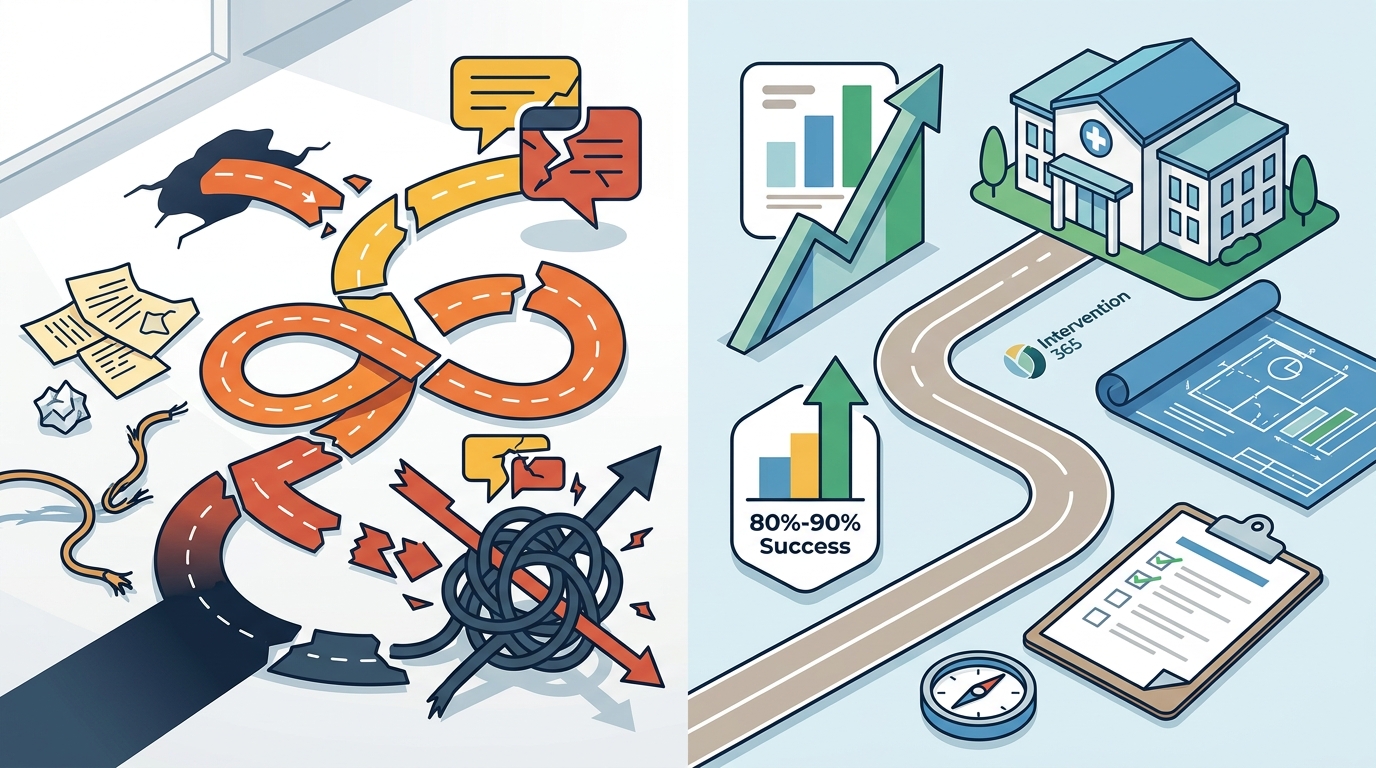
The numbers tell a compelling story. According to the Association of Intervention Specialists (AIS), most interventionists report a success rate in the 80% to 90% range for getting an individual to agree to enter treatment. The National Council on Alcoholism and Drug Dependence (NCADD) reports a higher than 90% success rate when a trained professional is involved.
Without professional help, outcomes drop sharply. Family-led attempts that lack structure often result in the individual feeling attacked, retreating further into addiction, or leaving the home entirely.
| Approach | Treatment-Entry Success Rate | Common Outcome if Unsuccessful |
|---|---|---|
| Professional Interventionist | 80%–90% | Many remaining individuals accept treatment within 1–2 weeks |
| DIY / Family-Led (No Professional) | Significantly lower (no reliable benchmark) | Increased denial, damaged relationships, escalation |
| No Intervention at All | Near 0% | Continued or worsening substance use |
The ARISE intervention model, published in the American Journal of Drug and Alcohol Abuse, reports an 83% success rate for prompting treatment entry, further reinforcing the value of evidence-based approaches.
Why Professional Interventions Work Better
Training in Motivational Techniques
Professional interventionists are trained in motivational interviewing, stage-of-change theory, and family systems work. These skills create optimal conditions for treatment acceptance rather than defensive reactions.
Structured Planning and Rehearsal
A successful intervention requires weeks of preparation. At Intervention 365, the process includes a comprehensive assessment, family education sessions, rehearsed letters, and pre-arranged treatment placement so the loved one can enter care immediately.
Neutral Mediation
Emotions run high during interventions. A professional serves as a neutral mediator, keeping the conversation focused on empathy and solutions rather than blame. This prevents the confrontation from spiraling into an argument that damages family bonds.
Risks of a DIY Intervention
Families who attempt interventions without guidance face several serious risks. The person may feel ambushed, leading to anger and deeper withdrawal. Family members may unknowingly engage in enabling behaviors that reinforce addiction patterns.
Without a plan for immediate treatment placement, even a successful conversation can lose momentum. If the individual agrees to get help but there is no bed available or logistics arranged, the window of willingness can close within hours.
Unstructured confrontations also risk fragmenting the family further. When one member pushes hard while another enables, the person in addiction exploits those divisions to avoid accountability.
The Johnson Model: A Proven Framework
The Johnson Model is a structured, family-led intervention approach developed in the 1960s by Dr. Vernon Johnson. It involves a carefully planned event where loved ones present a unified message about the impact of the addiction and offer a clear path to treatment.
Intervention 365 uses the Johnson Model as a cornerstone of its practice. Led by Jim Reidy, a board-certified interventionist with over 750 successful interventions and nearly 15 years of experience, the team tailors each intervention to the individual while maintaining the model's structured, compassionate framework.
The Johnson Model is particularly effective for individuals in deep denial because it bypasses avoidance through a planned, surprise setting. Family members share prepared letters that express love and concern alongside clear consequences if treatment is refused.
What to Expect When You Hire an Interventionist
Initial Consultation
The process begins with a confidential phone call. At Intervention 365, Jim Reidy personally listens to the family history, substance use pattern, and current risk level. Families across Pennsylvania, New Jersey, Florida, and the entire East Coast can access services quickly because the team prioritizes urgency.
Family Preparation
Before the intervention day, the family receives coaching on communication, boundary-setting, and how to stop enabling. This education transforms the family system even before the loved one enters treatment.
The Intervention and Beyond
On intervention day, the professional guides the conversation, manages emotional reactions, and presents pre-arranged treatment options. If the loved one agrees, Intervention 365 coordinates sober escort services to transport them directly to detox or rehab, ensuring the momentum is not lost.
Key Takeaways
- Professional interventions achieve an 80% to 90% success rate for treatment entry, according to the Association of Intervention Specialists.
- DIY interventions lack structure and often result in increased denial, damaged relationships, or the individual leaving the conversation.
- The NCADD reports a higher than 90% success rate when a trained professional leads the intervention.
- The Johnson Model, developed by Dr. Vernon Johnson in the 1960s, remains one of the most widely used and effective intervention frameworks.
- Immediate treatment placement logistics are critical; a gap between agreement and admission can cause the person to change their mind.
- Family education on enabling behaviors is a core component of professional interventions and benefits the entire household regardless of the loved one's initial response.
- Intervention 365, led by Jim Reidy, has completed over 750 successful interventions across the East Coast.
Frequently Asked Questions
What is the success rate of a professional intervention?
Most professional interventionists report an 80% to 90% success rate for getting the individual to agree to enter treatment. The NCADD cites figures above 90% when a certified interventionist is involved.
What happens if the person refuses treatment during the intervention?
Even when an individual initially refuses, many accept help within one to two weeks after a professionally conducted intervention. The structured process plants a seed of awareness that often leads to a later decision to seek treatment.
How is a professional intervention different from a family conversation?
A professional intervention follows a proven model with assessment, family coaching, rehearsed communication, pre-arranged treatment, and neutral mediation. A family conversation typically lacks this structure and is more likely to escalate emotionally.
What is the Johnson Model of intervention?
The Johnson Model is a structured approach developed in the 1960s by Dr. Vernon Johnson. It involves a planned, surprise meeting where family members present a unified message of concern and clear consequences, guided by a trained interventionist.
How long does it take to plan an intervention?
Planning typically takes several days to a couple of weeks, depending on the complexity of the situation. Intervention 365 is known for rapid response, with the ability to mobilize within 24 to 48 hours for urgent cases.
Does insurance cover intervention services?
Intervention services are generally not covered by health insurance. However, many families find that the cost is a worthwhile investment given the high success rates and the potential cost of continued addiction, including medical emergencies, legal issues, and lost employment.
Can an intervention be done remotely?
Yes, virtual interventions are available and can be effective when in-person meetings are not feasible. A professional interventionist guides the process through video calls, ensuring all participants can collaborate effectively.
Why should I choose Intervention 365?
Intervention 365 is led by Jim Reidy, a board-certified interventionist featured on A&E's Intervention, with over 750 successful interventions across Pennsylvania, Florida, and the broader East Coast. The team offers family-friendly pricing, 24/7 availability, and a compassionate, structured process from first call through treatment placement.
Take the Next Step Today
Every day without action allows addiction to tighten its grip. If someone you love is struggling, a professional intervention offers the highest statistical chance of getting them into treatment. Contact Intervention 365 today to speak directly with Jim Reidy and his team. The call is confidential, and the team is ready to help your family move from crisis to clarity.