

Watching someone you love struggle with substance abuse is painful, confusing, and isolating. You may find yourself wondering whether the situation is serious enough to warrant professional intervention or if you are overreacting. The truth is that addiction rarely resolves on its own, and early recognition of warning signs can save a life. In this guide, we walk you through the key indicators that your loved one has crossed the line from problematic use into a crisis that demands expert support. Whether you are in Pennsylvania, Florida, or anywhere on the East Coast, understanding these signs is the first step toward healing.
Understanding Addiction as a Medical Condition
Addiction is a physical and psychological condition that involves the compulsive use of a substance despite negative consequences to all aspects of the individual's life. It is not a moral failing or a lack of willpower. According to SAMHSA's 2023 National Survey on Drug Use and Health, approximately 8.9 million people misused opioids in the past year alone.
A substance use disorder (SUD) is characterized by a person's inability to stop using drugs or alcohol despite the physical or social harm the addiction causes. Recognizing this clinical reality helps families approach the situation with empathy rather than judgment, which is essential when encouraging a loved one to accept help through professional intervention services.
Behavioral Warning Signs to Watch For
Isolation and Secrecy
One of the earliest indicators is withdrawal from family and social circles. Your loved one may hide their substance use, become evasive about their whereabouts, or spend increasing time with new acquaintances who support their habits. If they become defensive or angry when you raise concerns, this is a significant red flag.
Declining Performance at Work or School
Frequent absences, unexplained problems at work, or a sudden drop in academic performance often signal that substance use has begun to dominate daily priorities. They may take unusual days off or offer poorly explained excuses for missing obligations.
Lying and Manipulative Behavior
Elaborate stories, broken promises, and manipulative tactics are hallmarks of progressing addiction. The person may resort to deceitful behavior to cover up their use or secure the means to sustain it. Learning to identify these patterns is something the team at Intervention 365 helps families navigate through their family roles in addiction resources.
Physical and Health Red Flags
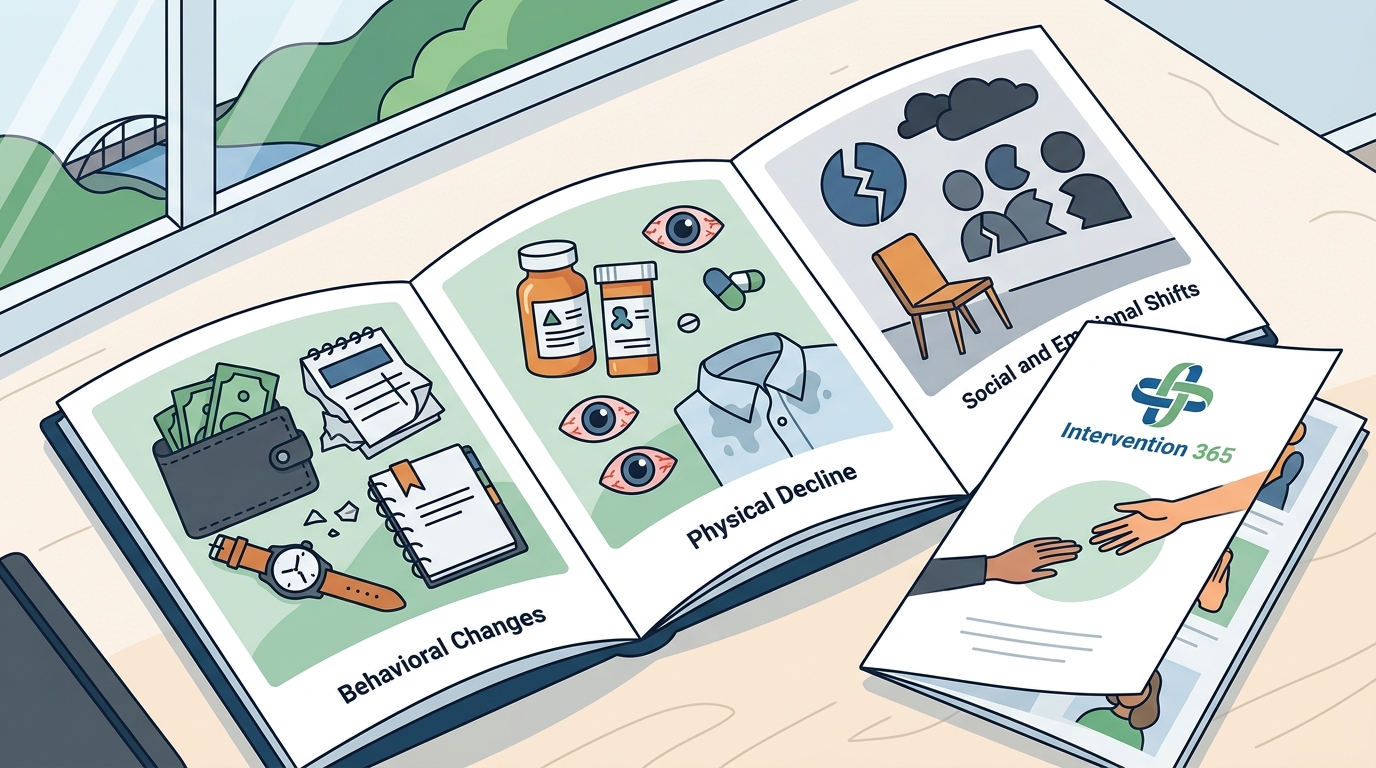
Physical changes are often the most visible indicators. Watch for glassy or bloodshot eyes, dilated pupils, sudden weight loss, poor hygiene, and disrupted sleep patterns. Nosebleeds, a persistent runny nose, or unusual sniffing can indicate inhalant or stimulant use.
Tolerance is another critical sign. Tolerance is the body's need for increasing amounts of a substance to achieve the same effect, and it is one of the DSM-5 diagnostic criteria for substance use disorder. If your loved one is drinking or using noticeably more than before, neurological adaptation is occurring.
| Behavioral Signs | Physical Signs |
|---|---|
| Increased secrecy and isolation | Bloodshot or glassy eyes |
| Declining work or school performance | Unexplained weight changes |
| Lying about whereabouts or finances | Disrupted sleep patterns |
| Anger when confronted | Frequent nosebleeds or sniffing |
| New, unfamiliar social circle | Neglected personal hygiene |
| Legal troubles (e.g., DUI arrests) | Increased tolerance to substances |
Emotional and Financial Indicators
Rapid mood swings, unexplained anxiety, and deepening depression can accompany substance abuse. Your loved one may express a genuine desire to stop but find themselves unable to follow through. This is the clinical reality of addiction: the motivation to quit and the neurological compulsion to use can coexist.
Financial deterioration is both a symptom and a driver of crisis. Unexplained withdrawals, borrowing money from friends, falling behind on bills, or missing household funds are serious indicators. These financial patterns often precede legal problems and housing instability, making early action even more important. You can learn more about how addiction impacts family finances on the enabling behaviors page at Intervention 365.
Crisis vs. Everyday Struggle: Knowing the Difference
Not every difficult day means a crisis. A crisis occurs when someone is overwhelmed and unable to handle what they are feeling or facing, often driven by substance abuse, a co-occurring mental health disorder, or both. Emergency signs include loss of consciousness after using, seizures, suicidal statements, or severe withdrawal symptoms such as confusion and trembling.
If any of these emergency indicators are present, call 911 immediately. For situations that are urgent but not immediately life-threatening, reaching out to a certified drug interventionist can help your family move from confusion to a clear plan of action.
Are You Enabling Without Realizing It?
Enabling is a pattern of behavior in which well-meaning family members unintentionally allow addiction to continue. Common examples include providing money that funds substance use, making excuses for missed work, handling the person's responsibilities, or avoiding difficult conversations out of fear.
Research suggests that with the help of a professional interventionist, families see upwards of a 90% success rate in getting a loved one to agree to enter detox or rehab. Breaking enabling patterns is one of the most powerful steps a family can take. The guide to staging an intervention on Intervention 365 walks families through this process.
When and How to Take Action
Do Not Wait for Rock Bottom
One of the most dangerous myths in addiction is that a person needs to hit rock bottom before they will accept help. As interventionist Jim Reidy and the team at Intervention 365 emphasize, rock bottom too often means a tragic, irreversible outcome. Studies consistently show that individuals who enter treatment earlier have better long-term recovery outcomes.
Start the Conversation
Choose a time when your loved one is sober. Speak from a place of love, not judgment. Share specific examples of how their behavior has affected the family. Be prepared for denial, and understand that you may need more than one conversation.
Bring in Professional Help
A professional intervention is a structured, compassionate conversation designed to motivate an individual to accept treatment. Intervention 365, led by board-certified interventionist Jim Reidy with over 750 successful interventions across Pennsylvania, Florida, and the East Coast, provides family-centered intervention services that guide families from crisis to treatment placement.
Key Takeaways
- Addiction is a medical condition, not a character flaw. Approach your loved one with empathy.
- Behavioral signs such as isolation, lying, and declining performance often appear before physical symptoms.
- Tolerance and withdrawal are clinical indicators that professional treatment is needed.
- Financial deterioration and legal problems signal that addiction has escalated to crisis level.
- Enabling behaviors, while well-intentioned, keep addiction alive. Recognizing them is critical.
- Do not wait for rock bottom. Early intervention produces better outcomes.
- A certified interventionist can help your family create a unified, strategic plan to get your loved one into treatment.
Frequently Asked Questions
What is the difference between substance use and substance use disorder?
Substance use becomes a disorder when the recurrent use of alcohol or drugs causes clinically significant impairment, including health problems, disability, and failure to meet major responsibilities at work, school, or home. A formal diagnosis is based on criteria in the DSM-5.
How do I know if my loved one's drug use has become an addiction?
Look for patterns: increasing tolerance, inability to stop despite wanting to, withdrawal symptoms when not using, neglect of responsibilities, and continued use despite negative consequences. If multiple signs are present, professional help is likely needed.
Should I confront my loved one about their addiction?
Yes, but approach the conversation with care. Choose a time when they are sober, express concern without judgment, and provide specific examples. If they respond with denial or hostility, consider enlisting a professional interventionist to facilitate the discussion.
What is a professional intervention?
A professional intervention is a carefully planned, structured conversation led by a trained interventionist. Family members and close friends come together to express concern and encourage the individual to enter treatment. It is designed to be compassionate, not confrontational.
How effective are professional interventions?
With a professional interventionist guiding the process, studies indicate upwards of a 90% success rate in getting an individual to agree to enter detox or rehab. The structured approach significantly increases the likelihood of a positive outcome compared to unguided family efforts.
What if my loved one refuses help?
Refusal is common and does not mean the situation is hopeless. A skilled interventionist can work with your family to set healthy boundaries, stop enabling behaviors, and create conditions that make accepting treatment the most logical choice. Learn more on the why families wait to intervene page.
Does Intervention 365 serve families outside Pennsylvania?
Yes. Intervention 365 operates across Pennsylvania, Florida, New Jersey, Maryland, Virginia, Delaware, and beyond. Their team travels nationwide to support families in crisis.
How quickly can an intervention be arranged?
In many cases, Intervention 365 can mobilize within 24 to 48 hours. Addiction does not wait, and neither should families. Contact them directly to discuss your situation.
Take the First Step Today
If you recognize these signs in someone you love, do not wait for the situation to get worse. Contact Intervention 365 now to speak with a certified interventionist who can help your family move from fear and confusion to a clear path toward recovery. Every day of delay is a day of unnecessary risk.