

If your family is considering a professional addiction intervention, one of the first questions you likely have is how long the planning process takes before the actual intervention can be safely conducted. The answer depends on several factors, including the intervention model used, the severity of the addiction, family readiness, and logistical details like treatment placement. In most cases, an intervention can be planned and executed within a few days to two weeks. Understanding each phase of the process helps families act with both urgency and confidence, which is exactly what the team at Intervention 365 helps families do every day.
What Is Intervention Planning?
Intervention planning is the structured preparation process that occurs before a family confronts a loved one about their addiction in a guided, compassionate setting. It involves assembling a team, educating family members, coordinating treatment logistics, and rehearsing the intervention conversation itself.
A professional interventionist is a trained specialist who facilitates these conversations between individuals struggling with substance abuse and their concerned family members. At Intervention 365, Jim Reidy, a board-certified interventionist with nearly 15 years of experience and more than 750 successful interventions, leads families through every step of this process.
Typical Intervention Planning Timeline
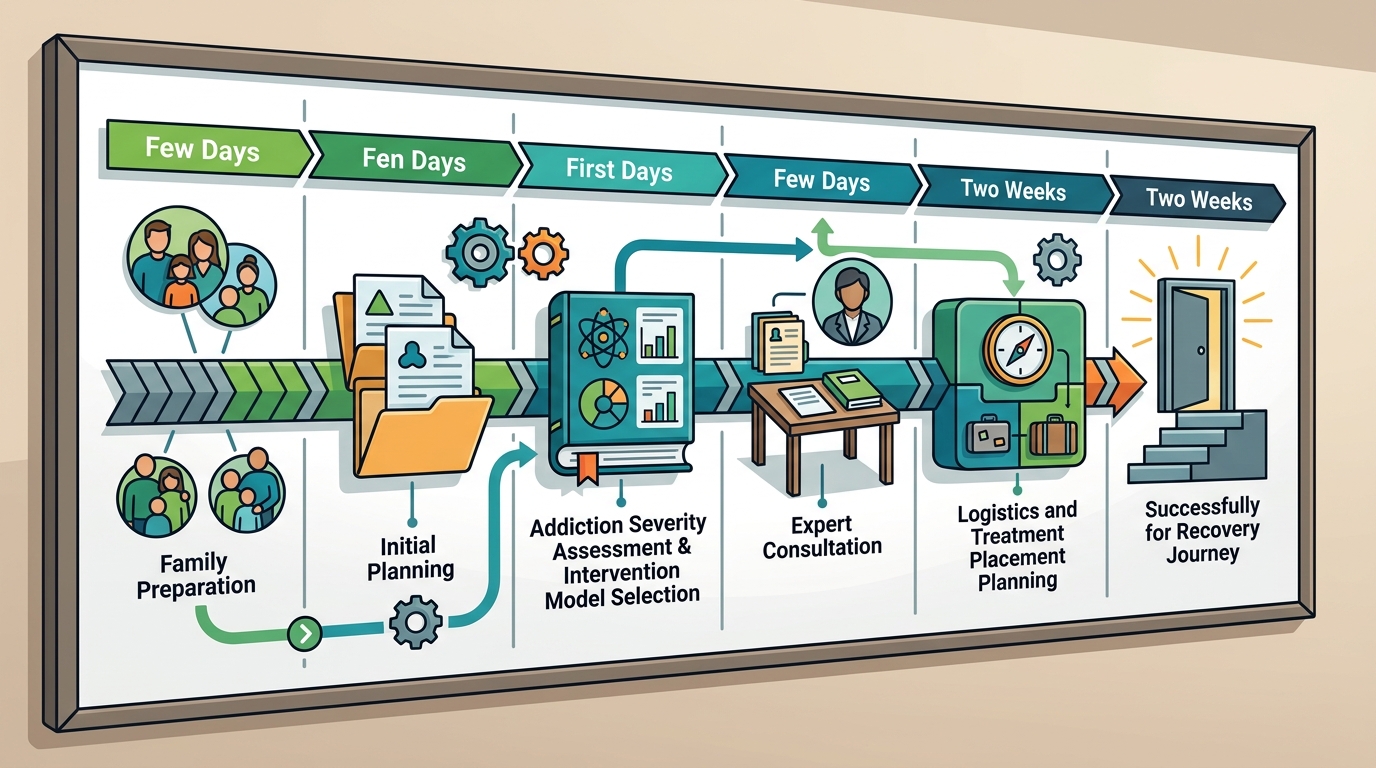
Most professional addiction interventions can be planned in as few as 24 to 72 hours in crisis situations, or within one to two weeks under standard circumstances. The timeline below represents a common planning sequence:
| Phase | Typical Duration | Key Activities |
|---|---|---|
| Initial consultation | Day 1 | Family contacts interventionist; situation is assessed |
| Family education sessions | Days 1 to 5 | Interventionist coaches family individually and as a group |
| Treatment placement | Days 2 to 7 | Detox or rehab bed is secured; insurance is verified |
| Letter writing and rehearsal | Days 3 to 10 | Each participant writes and reviews their letter |
| Logistics and travel | Days 5 to 12 | Transportation, packing, and scheduling are confirmed |
| The intervention | Day 7 to 14 | Structured, compassionate conversation with loved one |
In urgent situations, this entire sequence can be compressed. One family review noted they hired Jim Reidy on a Friday and he was ready to conduct the intervention by Saturday.
Factors That Affect Timing
Severity of the Crisis
When someone is in immediate danger from overdose, self-harm, or severe health decline, planning must be compressed to hours rather than days. The Johnson Model is often used in crisis modes where the individual may be days away from a tragic outcome.
Family Readiness and Alignment
One of the most common challenges is getting all family members on the same page. In many addiction situations, one family member is ready to act, another is scared, another is enabling, and another wants to avoid conflict entirely. The interventionist works to unify everyone around a single plan. Learn more about how enabling behaviors can delay the process.
Treatment Bed Availability
Securing a spot at a reputable detox or rehab facility is a critical step that can either speed up or slow down the timeline. The team at Intervention 365 collaborates with facilities to ensure a bed is available the same day the intervention takes place.
Intervention Models and Speed
The intervention model your family chooses directly impacts how long planning takes. An intervention model is a clinically informed framework that guides how the conversation with the addicted person is structured and delivered.
| Model | Planning Duration | Approach |
|---|---|---|
| Johnson Model | 3 to 14 days | Surprise intervention; family meets with interventionist at least twice before the event |
| ARISE Model | 1 to 6 weeks | Gradual, invitational; the loved one is aware of all meetings and invited to attend |
| CRAFT | 4 to 12 weeks | Family training program focused on changing responses to the addicted person over time |
Intervention 365 primarily utilizes the Johnson Model, which focuses on creating a loving, non-confrontational approach where family members unite to motivate their loved one to accept help. According to Shatterproof, research has shown that when conducted under professional supervision, the Johnson Model is effective at getting someone to enter and complete treatment.
What Happens During Each Phase
Assessment and Consultation
The process begins when a concerned family member contacts a professional interventionist. During this initial call, the interventionist assesses the situation and gathers key details about the individual's substance use history, personal circumstances, and the family dynamic.
Family Preparation
Family preparation sessions typically span one to two weeks. Each family member works with the interventionist individually and as a group. Everyone writes a letter expressing their concern, and the interventionist reviews each letter for tone and content. This phase also includes education about family roles in addiction and how to stop patterns that unintentionally keep addiction alive.
Logistics and Execution
A treatment bed is reserved at a specific detox or residential facility for the day of the intervention. If the person will fly to treatment, tickets are booked. Clothing and documents are pre-packed by a family member. The day before, the family gathers to practice reading letters, handle expected reactions, and confirm who will speak and in what order.
Why Speed Matters in Addiction Intervention
Every day of delay is a day that addiction continues to cause harm. Studies consistently show that individuals who enter treatment earlier in the course of their addiction have better long-term outcomes. The longer an addiction progresses, the more entrenched it becomes.
As the team at Intervention 365 emphasizes, there is no such thing as the "right moment" to intervene. Waiting for a mythical rock bottom is a dangerous gamble. With professional help, families can move from confusion and crisis to action and treatment placement in a matter of days.
According to the Substance Abuse and Mental Health Services Administration (SAMHSA), early engagement with treatment services significantly improves recovery outcomes. With the help of a professional interventionist, there is upwards of a 90% success rate in getting an individual to agree to enter detox or rehab.
Key Takeaways
- Most addiction interventions can be planned and executed within 3 to 14 days with professional guidance.
- In crisis situations, an experienced interventionist like Jim Reidy can mobilize within 24 to 48 hours.
- The Johnson Model, used by Intervention 365, typically requires two to three family meetings before the intervention.
- Treatment placement and travel logistics should be arranged before the intervention day.
- Family alignment is often the biggest variable in the planning timeline.
- Waiting for the "perfect moment" increases risk; early intervention produces better outcomes.
- Professional interventions have a success rate of up to 90% for treatment acceptance.
Frequently Asked Questions
How quickly can an intervention be organized in an emergency?
In an emergency, a professional interventionist can often begin working with the family within 24 hours. Jim Reidy at Intervention 365 has traveled and conducted interventions the day after being contacted by a family in crisis.
Does the type of addiction affect how long planning takes?
Yes. Opioid or fentanyl crises often require faster timelines due to overdose risk, while alcohol or marijuana situations may allow a slightly longer preparation window. Visit the fentanyl addiction resource page for more information.
What is the Johnson Model of intervention?
The Johnson Model is a structured intervention approach created by Dr. Vernon Johnson in which family members and friends prepare in advance, then confront the individual in a surprise meeting focused on love and concern, not blame.
Can an intervention be done remotely?
Yes. Virtual interventions using video calls are available and can be effective when family members are spread across different locations. A professional interventionist guides the process to ensure productive communication.
What happens if the person refuses treatment during the intervention?
While the goal is to encourage acceptance, the decision ultimately remains with the individual. However, the family preparation and boundary-setting that occur during planning often lead to treatment acceptance in the days following, even if not immediately.
How many family members need to be involved?
Typically, three to eight people form the intervention team. The interventionist helps determine who should participate based on their relationship to the individual and their emotional readiness.
What should I do first if I think my family needs an intervention?
The first step is to call a professional interventionist for a confidential consultation. This call is usually free and helps you understand your options without any obligation. Contact Intervention 365 to speak with someone today.
Take the Next Step Today
If your loved one is struggling with addiction, the planning process does not have to take weeks. With the right professional guidance, your family can move from that first phone call to a structured, compassionate intervention in just days. Intervention 365 serves families across Pennsylvania, Florida, and the entire East Coast with family-friendly pricing and a hands-on approach. Call Intervention 365 now to start your free, confidential consultation and take the first step toward saving a life.